WASHINGTON — It was supposed to be a deal.
Instead, it turned into a diplomatic disaster — and at the center of it all sits a country on the other side of the world that never even showed up to the negotiating table.
China.
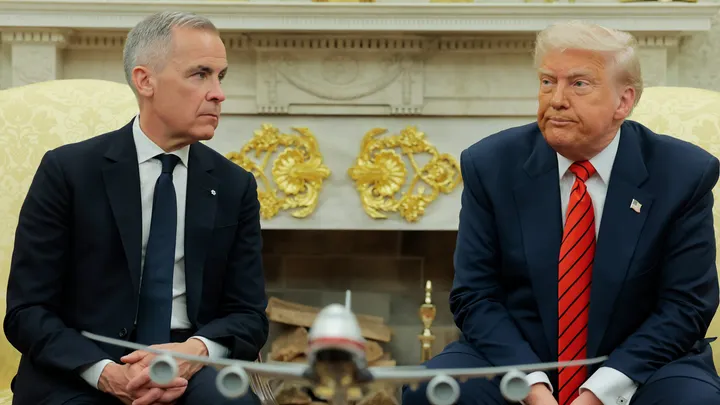
President Trump's 50% tariffs on roughly $28 billion in Canadian goods slammed into effect Friday, and Canadian Prime Minister Mark Carney promptly suspended negotiations, yanked his trade team back to Ottawa, and declared the United States had pulled a last-minute “power play” to choke off Canada's ability to strike deals with other nations.
Translation: Don't trade with Beijing.
“IT'S A POWER PLAY”
Carney, speaking to reporters Saturday, offered the most detailed account yet of what blew up the talks — and it wasn't lumber, and it wasn't dairy.
It was sovereignty.
“The U.S. introduced at the last hours, in the last hour, efforts to restrict our ability to have other trade deals,” Carney said.
Asked what he thought Washington was really after, the Canadian leader didn't mince words: “It's a power play. It's a power play and, you know, [it] becomes a question of sovereignty.”
The U.S. demands in the final hours touched Canada's other trading relationships, its auto sector, and — in a move that infuriated Ottawa — protections for Canadian culture and the French language.
Carney's verdict was blistering: “In short, they asked too much, and they offered too little.”
THE CHINA DEAL THAT STARTED IT ALL
The whole mess traces back to a single, audacious move by Carney earlier this year.
In January, breaking ranks with Washington, the Canadian prime minister flew to Beijing and struck a landmark tariff-cutting deal with Chinese President Xi Jinping.
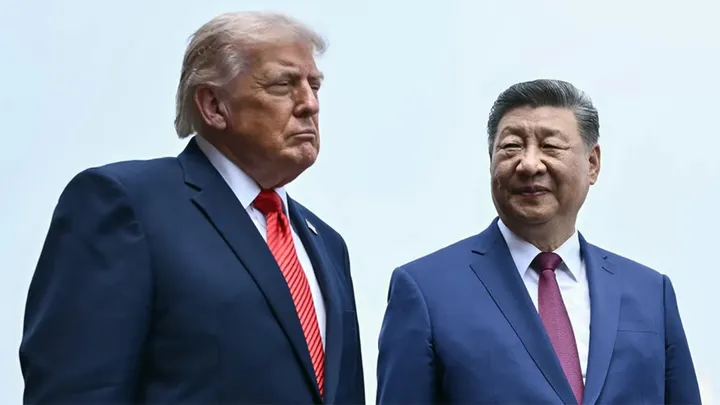
The terms? Canada slashed its 100% tariff on Chinese electric vehicles down to 6.1% — allowing up to 49,000 Chinese EVs into the Canadian market annually, growing to about 70,000 over five years. In return, China cut tariffs on Canadian farm products like canola.
It was the first crack in the united front the U.S. and Canada had maintained against Beijing's trade practices since 2024, when both nations slapped 100% tariffs on Chinese EVs in lockstep.
Trump exploded.
“China is successfully and completely taking over the once Great Country of Canada. So sad to see it happen.” the president posted on social media. He threatened a 100% tariff on all Canadian goods if the China deal went ahead.
Treasury Secretary Scott Bessent spelled out the administration's fear plainly: “We can't let Canada become an opening that the Chinese pour their cheap goods into the U.S.”
He accused Carney of trying to “virtue-signal to his globalist friends at Davos.”
“WE'RE ATTACKED”
Now the tariffs are live, and Carney is promising payback — dollar for dollar.
Canada's retaliation will target U.S. steel, dairy, appliances, agricultural equipment, pulp and paper, and electronics. The measures take effect Sept. 8 — the Tuesday after Labor Day.
Asked whether the escalation amounted to a full-scale trade war, Carney didn't flinch.
“We're attacked. Like you're at war when you get attacked, we got attacked,” he said. “We've got the reserves. We've got resilience. We have the plan. We get the focus. We respond. We're going to focus on what we can control. We are going to build.”
WASHINGTON'S SIDE OF THE STORY
The White House tells a very different tale.
U.S. Trade Representative Jamieson Greer said Friday that Canada was the one that torpedoed the deal — declining to finalize terms both sides had agreed to earlier in the week and then making new demands while walking back previous commitments.
“Despite the U.S. offer to Canada to receive the best treatment of any major exporter to our market, new demands and walk backs of other commitments by Canada have upended the careful balance reached in the past days,” Greer said in a statement.
The U.S., he said, had offered significant tariff reductions on steel, aluminum, autos and lumber — plus a broader economic and national security partnership covering digital trade, critical minerals, aerospace and export controls.
Autos were a particular battleground. The two sides couldn't agree on tariff levels, how to treat Canadian content, or which vehicles would even be covered by a deal.
And the U.S. kept pushing for changes to Canada's cultural protections and French-language safeguards — a non-starter for Ottawa.
FROM “DEAL!” TO DISASTER
The collapse is a whiplash reversal from just days earlier, when Trump paused the 50% tariffs for 72 hours and triumphantly announced that the U.S. and Canada had — subject to final paperwork — reached a “DEAL!”
Carney said Saturday the two sides had made significant progress before it all unraveled in the final hour.
Now Canada is preparing additional support for businesses caught in the crossfire — particularly small and medium-sized companies — with details to come alongside the retaliatory measures.
THE BIGGER PICTURE
Here's the uncomfortable truth nobody in Washington wants to say out loud: Trump's tariff blitz is driving America's closest allies straight into Beijing's open arms.
Carney has emerged as a leader of a growing movement of countries looking to link up and counter the U.S. under Trump — and China is more than happy to oblige.
The EV deal was just the beginning. By squeezing Canada on one end and demanding it cut ties with Beijing on the other, the administration has managed to accomplish the one thing it said it wanted to prevent: pushing Ottawa and Xi closer together.
So while the headlines scream about tariffs and trade wars, the quiet story is the one happening 7,000 miles away — where a Chinese president is watching two North American neighbors tear each other apart, and smiling.
I News Australia is an officially accredited member of the United States Media Delegation and White House Press Pool. This report was compiled from Washington, D.C., as part of Independent News Australia's coverage of U.S. trade and economic policy.