The Dominican Republic's decision to showcase its emerging oil and gas potential at IMAGE 2026 in Houston is a significant development for the Caribbean — and potentially a major opportunity for American energy, technology and investment.
Held from August 17–20 at Houston's George R. Brown Convention Center, IMAGE 2026 brought together thousands of geoscientists, energy executives, investors and industry leaders from around the world. The Dominican Republic used the gathering to highlight its hydrocarbon potential and promote opportunities for international investment. Nisael Dirocie, director of the Ministry of Mines' hydrocarbon exploration and production, and Gilsa Perez, officer in charge of hydrocarbon promotion, presented the country's sedimentary basins to the room.
Yet the move also raises a broader question: Why now, and why does the United States appear to be playing such a limited role in an opportunity unfolding so close to its own shores?
Some observers have questioned why the Dominican Republic is only now publicly emphasizing its hydrocarbon potential when government sources have reportedly been aware of significant deposits for some time. One example is the Monte Cristi discovery.
According to sources familiar with the matter who spoke exclusively with I News Australia on condition of anonymity, the administration of President Luis Abinader has been in possession of a report concerning the Monte Cristi find, prepared by American geophysicist Dr. Paul McColgan, since late 2024.
There are also firm and verifiable claims that Dominican authorities have engaged primarily with non-American entities regarding the potential development of the country's hydrocarbon resources, including interests from the United Arab Emirates and the Far East. Those claims warrant serious examination.
Chinese cash already in Dominican mining
Chinese capital is already in Dominican mining. Zhongjin Lingnan Nonfemet, whose principal shareholder is the Guangdong provincial government, controls the Cerro de Maimón copper and zinc mine through an Australian subsidiary, in an acquisition financed in part by the China Development Bank.
At the 2019 opening of the country's first underground mine, the company's president told the room that Chinese investment in the Dominican Republic had passed US$230 million.
The United Arab Emirates has committed more than nine hundred million dollars to expanding a Dominican port and will host a government summit at Cap Cana in November, the same month it appears the Dominican Republic will place hydrocarbon concessions on offer.
A strategic partnership that should work both ways
The Dominican Republic is one of the United States' closest partners in the Caribbean. The two nations share deep economic, commercial, security and diplomatic ties that have been built over decades.
The United States also provides substantial support to the Dominican Republic, reportedly exceeding US$80 million annually through a range of assistance programs. In addition to this aid, the United States imports goods and services from the Dominican Republic of over US$34 billion annually.
This naturally raises an important question: Where is the reciprocity?
American taxpayers contribute significant resources to support the Dominican Republic, while American businesses, investors and energy companies possess the capital, expertise, technology and experience that could help unlock the country's emerging energy sector.
It is reasonable to ask why American companies should not be given a fair opportunity to participate.
BSD: American innovation leading the way
BSD Global Exploration is a U.S.-based technology company specializing in remote subsurface detection.
Its mission is ambitious: to locate oil, gas, water, gold, lithium and other resources beneath land and water before conventional drilling begins. BSD's proprietary technology can identify targets and provide coordinates and estimated depths, potentially allowing exploration companies to focus drilling and sampling efforts more efficiently rather than relying solely on traditional exploration methods.
BSD's published field record documents projects involving hydrocarbons, gold, water and lithium across multiple countries. In fact, it was BSD's technology that found the hydrocarbon discovery in Monte Cristi and further, according to BSD's CEO, Sami Benhamou, he showed President Abinader the extent of Dominican hydrocarbon locations back when President Abinader was president-elect. The Dominican Republic has been searching for hydrocarbons for over 50 years without success before BSD.
That is precisely the kind of American innovation that deserves recognition.
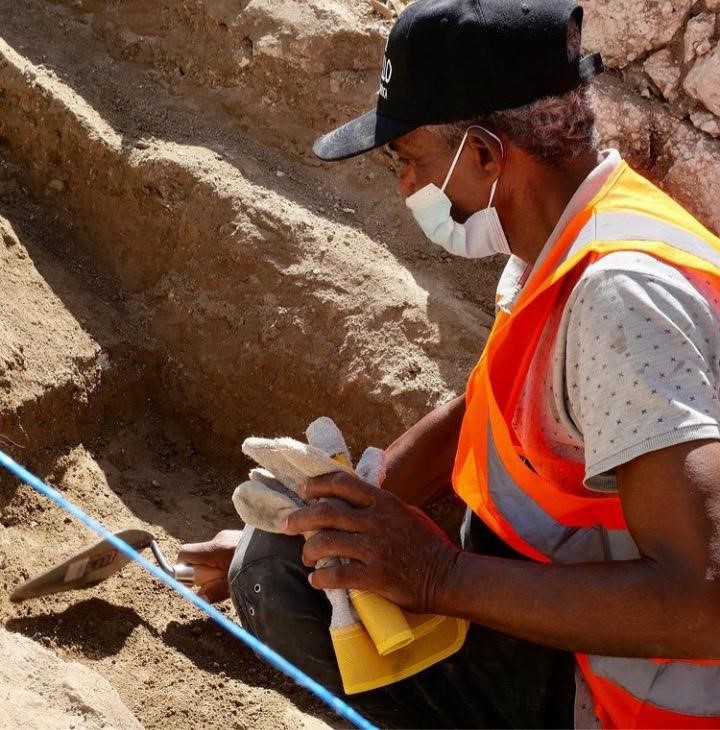
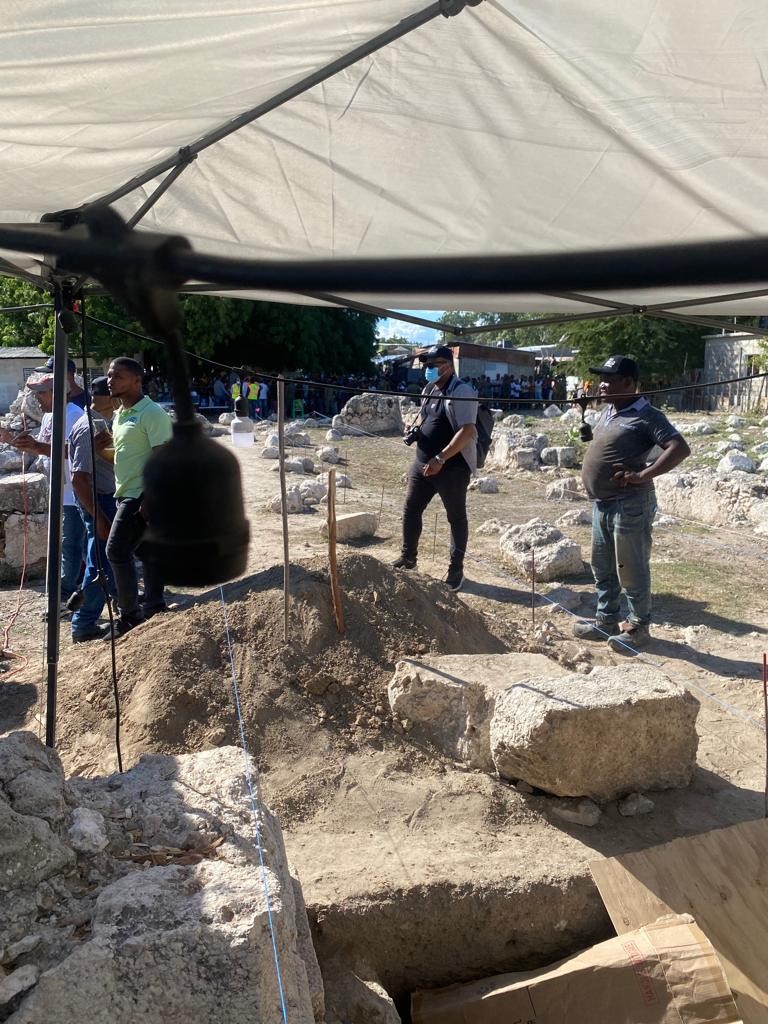
In December 2021 the Dominican newspaper El Nuevo Diario reported that researchers searching for the remains of Enriquillo, the Taíno cacique who led the first sustained indigenous rebellion in the Americas, had worked with BSD Global Exploration. The company's satellite technology produced georeferenced points where the remains of Enriquillo were located with the country's lead archaeologist and historian, Lidia Martínez de Macarrulla, thanking BSD for the burial location.
Rather than simply exporting capital, BSD is exporting American technology, entrepreneurship and ingenuity.
If BSD's technology helped identify promising hydrocarbon targets, the company deserves substantial credit — not because it is American, but because innovation should be acknowledged wherever it delivers results. It would seem that potential investors should be weary of investing in the Dominican Republic's hydrocarbon opportunities if the Dominican Republic has not been transparent about the source of the discovery.
The value of American technological leadership
There is a broader lesson here for Washington. American influence should not be measured solely by the level of financial assistance it provides overseas. It should also be measured by the contributions of American businesses, scientists, engineers, entrepreneurs and innovators.
Companies like BSD demonstrate the extraordinary value of American technological leadership. The United States remains home to one of the world's greatest concentrations of entrepreneurs, researchers, investors and innovators. Rather than focusing exclusively on aid, America should increasingly help partners build prosperity through investment, technology transfer and innovation.
The Dominican Republic's emerging energy sector is a test case. It is an opportunity to demonstrate that American partnership delivers more than just dollars — it delivers the technology, expertise and innovation that turn raw potential into real prosperity.
If the United States is serious about competing with Chinese and Gulf capital in its own hemisphere, it cannot afford to sit on the sidelines while others lock up the deals. Washington should be actively championing American companies like BSD, ensuring they get a fair shot at the opportunities unfolding in the Caribbean.
The United States Deserves a Seat at the Table
This issue is ultimately bigger than one company or one hydrocarbon discovery. It is about whether the United States is receiving an appropriate return from its considerable economic and strategic investment in the Caribbean.
Washington has spent decades building partnerships throughout the region. American taxpayers provide assistance. American companies invest. American consumers purchase Dominican goods. American tourists contribute billions of dollars to the Dominican economy. American institutions cooperate with the Dominican Republic on security, trade, migration and development.
When potentially transformative natural resources emerge, American participation should not simply be an afterthought—it should be actively considered.
America should not be expected to continually provide support while being excluded from opportunities that its own companies, expertise and taxpayers have helped make possible.
The Dominican Republic has every right to determine how it develops its natural resources and with whom it partners. Sovereignty is not in question. But transparency, fairness and reciprocity should be.
If Dominican officials are pursuing partnerships with Emirati, Asian or other foreign entities, the rationale should be openly explained. If American companies have played a meaningful role in identifying these resources, that contribution should be acknowledged. And if American investors are being overlooked in a country that receives substantial U.S. assistance, the reasons should be clearly articulated.
Transparency Will Build Confidence
The Monte Cristi opportunity could become an important milestone for the Dominican Republic—and potentially a transformative development for the Caribbean. But investors require the full picture.
That means transparency regarding who identified the resources, what geological evidence exists, who owns the relevant data and intellectual property, what companies are involved, what agreements have been signed, and which domestic and foreign interests are seeking to develop the deposits. Anything less risks creating unnecessary questions around an opportunity that should instead inspire confidence.
The Dominican Republic stands at an important moment. It can pursue energy development in a manner that welcomes investment, rewards innovation, respects existing contributors and strengthens ties with its closest strategic partner. Or it can leave unanswered questions about why American expertise, investment and technology appear to be receiving less consideration than foreign alternatives.
The United States has been a committed partner to the Dominican Republic for decades. American taxpayers, businesses and investors deserve a seat at the table when potentially transformative opportunities emerge in a close partner's backyard.
America should not simply be the country that provides support. It should also be a partner in the opportunities that follow.
The question is not whether the Dominican Republic should develop its hydrocarbon resources. It should. The question is whether the United States will insist on being part of the story — or watch from the bleachers as Beijing and the Gulf states write the next chapter.