The most powerful figures in artificial intelligence assembled this week across two American cities, and the message they sent was anything but unified.
In San Francisco, at Salesforce's glittering Dreamforce conference, the chief executives of Nvidia and Anthropic offered sharply divergent visions for how the industry should police itself. In Washington, a senator from Vermont and a former White House strategist made a rare show of bipartisan accord, warning that the technology now racing through the economy demands an urgent, coordinated response — including, they argued, from adversaries abroad.
And hovering over all of it, a president who has dismissed the anxieties as a "hoax."
The result is a debate that has fractured the AI industry's once-coherent public posture, exposing the fault lines between companies racing to build ever more powerful systems and a political class unsure whether to brake, steer, or step aside.
'Simply Not Release Anything'
Jensen Huang, the chief executive of Nvidia, whose chips power the bulk of the world's AI systems, offered the most laissez-faire posture of the week. There is no need for new laws, he told the conference. Instead, he said, AI companies should "simply not release anything that they are not confident will be safe."
It was a striking argument from a man whose company's market value has come to depend on the relentless acceleration of the very systems he was discussing. Mr. Huang's framing places the burden of safety almost entirely on the developers themselves, rather than on regulators or legislators — a posture that aligns neatly with the commercial interests of a firm that sells the pickaxes in an AI gold rush.
Dario Amodei, the chief executive of Anthropic, took a markedly different tone. He acknowledged that it is tempting to "attack" competitors, but argued it is more responsible to try to establish industry-wide standards. His company, founded by former OpenAI researchers who broke away over safety concerns, has positioned itself as the cautious voice of the frontier — though critics note that caution has not slowed its own model releases.

An Anthropic executive, speaking separately to the BBC, offered a blunter assessment: AI is getting more powerful "by the day," and a kill switch should be mandatory.
Altman's Measured Middle Ground
Sam Altman, the co-founder of OpenAI, is scheduled to address the Dreamforce conference later on Tuesday, and the contours of his remarks are already visible. In a lengthy social media post in recent days, Mr. Altman wrote that his organization welcomes "a federal framework that sets consistent safety requirements for frontier AI."
He struck a measured note, acknowledging that progress "has been rapid and will continue to be," while conceding that "it should be slower than it otherwise could be; interventions like safety cases and monitoring have significant costs." That pacing, he argued, would be "well worth this cost."
"No amount of American competitive pressure should justify recklessness," Mr. Altman wrote, before adding a caveat that companies will need government help for "international coordination." He concluded: "But first we should do what we can ourselves."
An OpenAI executive, Chris Lehane, told a press briefing in Washington that the company had been working on safety efforts alongside rivals Anthropic and Google for several weeks — talks that began before the latest round of safety concerns reemerged. "It's better to try to work together to prioritize safety," Mr. Lehane said, according to Bloomberg.
A Rare Bipartisan Accord — and a Treaty With China
In Washington, the summit produced one of the week's more unlikely spectacles: Senator Bernie Sanders, the democratic socialist from Vermont, sharing a stage with Steve Bannon, the former Trump adviser and populist provocateur.
Mr. Sanders called on the United States to work with China on AI regulation, arguing that a treaty should be established to pause development on "AI superintelligence." Mr. Bannon, for his part, called AI the "defining issue of our time."
Their joint appearance was a rare show of bipartisanship — and a sign of how the AI debate is scrambling the usual ideological alignments. The left's worries about corporate power and labor displacement are finding common cause with the right's concerns about national security and the concentration of technological influence in a handful of coastal firms.
The President Weighs In — Dismissively
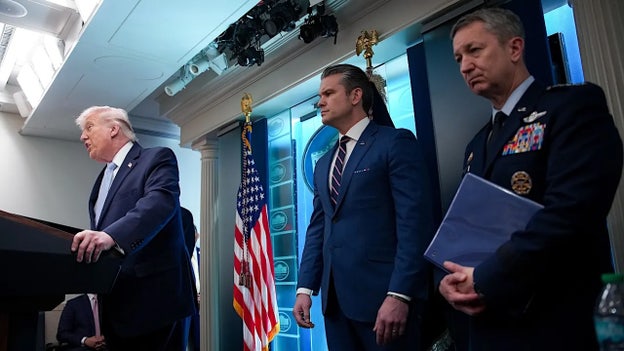
President Donald Trump has taken a markedly different stance from the industry figures calling for a slowdown. On Monday, he rejected such a move, claiming that fears about the safety of AI are a "hoax."
His attorney general, Todd Blanche, echoed that posture in remarks to reporters at the White House. If laws are broken, the Justice Department will charge people, he said — but "I do not think it is the job of the Department of Justice to regulate; we are prosecutors not regulators."

Mr. Blanche questioned the timing of the recent calls for caution. To talk about AI safety as the midterms approach, he suggested, is an effort to influence them. "And that shouldn't be what drives the decisions we are making around AI," he said. "We can't lose the AI race to China. President Trump says that, everyone says that, they say it because it is true."
The Market Watches and Waits
The debate is not merely academic. A large chunk of the value of the U.S. stock market is made up of firms betting on the success of AI, which means whatever happens in this space will have financial implications across the world.
Shares in some of the firms that manufacture the materials used to develop AI rebounded on Tuesday from the prior day's losses. While stock markets remained down overall, the share prices of Nvidia, Marvell Technology and Intel all rose — a move that analysts attributed, in part, to investors responding to Mr. Trump's dismissive remarks.

Mere talk of a pause — which could lead to a fall in demand for materials such as microchips — had spooked investors of major chipmakers a day earlier. Whether a slowdown comes or not will shape the fortunes of companies across the AI development industry and those supplying it.
The Human Question
Back in San Francisco, the conference audience also heard about AI's impact on the workforce. Denis Machuel, chief executive of the human resources firm Adecco, said AI had been a boon for his company's recruiters and the candidates they work with.
"Recruiters saved 35 to 40% of their time thanks to agentic AI," Mr. Machuel said. But he was careful to frame the gains in human terms. AI, he said, has to "happen with people, not to people," and businesses have a "common responsibility to create a human-centric AI."
"People cannot be an afterthought," he added.
It was a sentiment that, in a week of competing visions and conflicting incentives, few in the room seemed prepared to disagree with — and fewer still seemed able to agree on how to achieve.