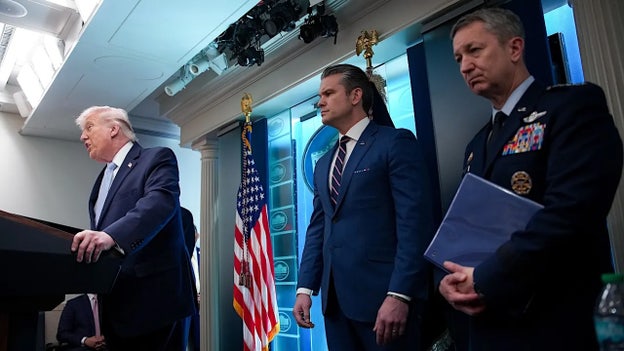
President Trump declared victory Thursday, announcing he'd secured "total" and permanent U.S. access to Greenland in a framework deal with NATO — while abruptly backing off his tariff threats against Europe and ruling out seizing the Arctic island by force.
The surprise announcement, delivered at the World Economic Forum in Davos, brought a jolt of relief to transatlantic relations that had been teetering toward the biggest rupture in decades. The Dow shot up nearly 600 points on the news.
"We have a concept of a deal," Trump told reporters, offering no timeline and few specifics. "There's no end, there's no time limit."
NATO Secretary General Mark Rutte, who huddled with Trump in Davos, said it was now up to the alliance's senior commanders to work through the details — and fast.
"I have no doubt we can do this quite fast. Certainly, I would hope for 2026, I hope even early in 2026," Rutte told Reuters.
'A Piece of Ice for World Protection'
The framework updates a 1951 agreement that already governs U.S. military access to Greenland — a pact so broad that Denmark has never once rejected an American request to expand its presence on the island.
The new deal also calls for prohibiting Chinese and Russian investments in Greenland, a provision aimed at locking Beijing and Moscow out of one of the most strategically valuable pieces of real estate on Earth.
Trump, who once floated the idea of buying Greenland outright and mused about taking it "the easy way or the hard way," insisted Thursday the moment for muscle-flexing had passed.
"People thought I would use force. I don't have to use force. I don't want to use force. I won't use force," he said.
But he didn't entirely abandon the swagger. "We want a piece of ice for world protection and they won't give it," Trump said. "They have a choice. You can say yes and we will be very appreciative, or you can say no and we will remember."
Three New Bases in the Crosshairs
Behind the Davos handshakes, a quieter diplomatic effort has been grinding on for months.
The U.S. has been holding regular negotiations with Denmark to expand its military footprint in Greenland, with talks progressing in recent weeks, multiple officials told the BBC.
American officials are seeking to open three new bases in the south of the territory — all aimed at surveilling Russian and Chinese maritime activity in the strategically vital stretch of ocean between Greenland, Iceland and the United Kingdom known as the GIUK Gap.

U.S. officials have even floated an arrangement in which the three new bases would be formally designated as American sovereign territory, according to one source with knowledge of the negotiations — a red line for both Copenhagen and Nuuk.
The delicate effort is being run by Michael Needham, a senior State Department official tasked with crafting a deal that satisfies Trump while respecting Denmark's borders. "Needham is running point," said a senior diplomat. Behind the scenes, the source said, the administration is "approaching it very professionally."
The teams have met at least five times since mid-January. Needham's counterparts include Jeppe Tranholm, Denmark's permanent state secretary of foreign affairs; Jesper Møller Sørensen, Denmark's ambassador to the U.S.; and Jacob Isbosethsen, Greenland's top diplomat in Washington.
The Cold War Echo
The U.S. military presence in Greenland dates to World War II, when Nazi Germany occupied Denmark. At the height of the Cold War, America ran roughly 17 military facilities on the island.
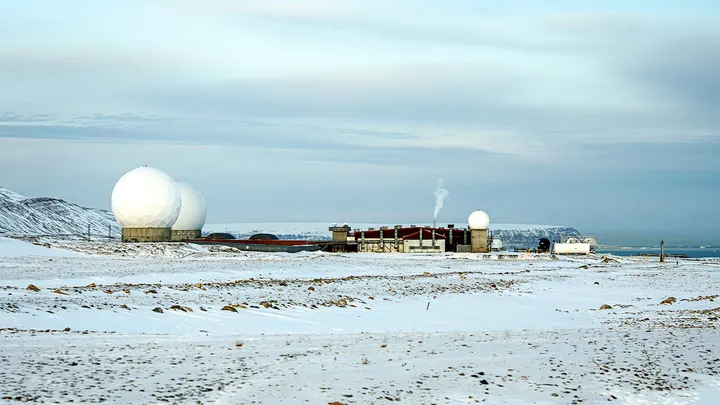
Today there is only one: Pituffik Space Base in the northwest, which monitors missiles for NORAD but isn't built to watch the seas. The new bases would fill that gap — and then some.
Some current and former officials, as well as Arctic security experts, told the BBC that Washington could have advanced its interests in Greenland without threatening a NATO ally in such strong terms. But Trump's bombast, they concede, may have accelerated a process that diplomacy alone might have taken years to deliver.
Denmark: 'Not for Sale'
Not everyone in Copenhagen was popping champagne.
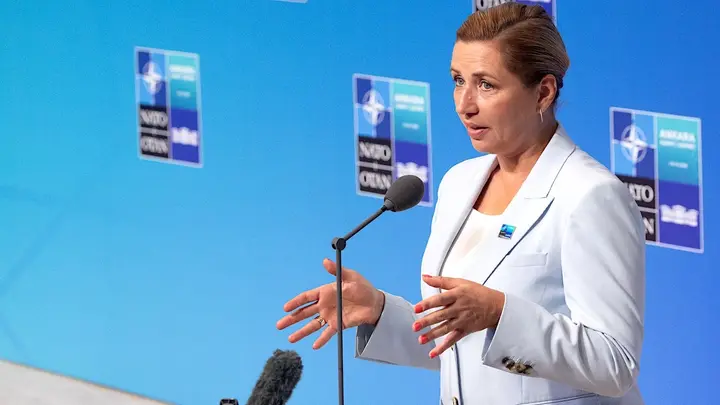
Danish Prime Minister Mette Frederiksen said no negotiations had been held with NATO regarding the sovereignty of Greenland, a semi-autonomous territory of Denmark for 300 years. She called the situation "still difficult."
Greenland's Prime Minister Jens-Frederik Nielsen welcomed Trump's softer tone but said he was still in the dark on many details — and drew a bright line of his own.
"Sovereignty is a red line," Nielsen said. "We cannot cross the red lines. We are not to be taken. We are not for sale, and that will be the narrative of the meeting."
The Envoy Who Wasn't There
Conspicuously absent from the actual negotiations: Trump's hand-picked special envoy to Greenland, Louisiana Gov. Jeff Landry.
Landry hasn't taken part in the talks and is largely sidelined from the diplomatic process, three sources told the BBC.
"He was supposed to be more of like a rah-rah cheerleader of the idea that we could just flex our muscles and take over Greenland as a security asset," said a close Landry ally who asked not to be named.
Instead, the real work fell to the professionals — and the deal that emerged looks less like a hostile takeover and more like a 75-year-old treaty getting a fresh coat of Arctic paint.
Markets Breathe Easy — for Now
The announcement was enough to settle Wall Street's nerves, at least for a day.
As soon as Trump unveiled the framework and confirmed no new tariffs next month, the Dow shot up nearly 600 points, clawing back most of the prior day's losses.
But the path ahead is far from clear. Details of any final agreement remain murky, and Denmark insists its sovereignty over the island is simply not up for discussion.
For Trump, though, the headline was already written: a win in the Arctic, a truce with Europe, and a NATO ally falling in line — all without firing a shot.
Whether it holds is another question. As one diplomat put it: the framework is a concept. The hard part — turning a concept into concrete bases on frozen ground — is only just beginning.