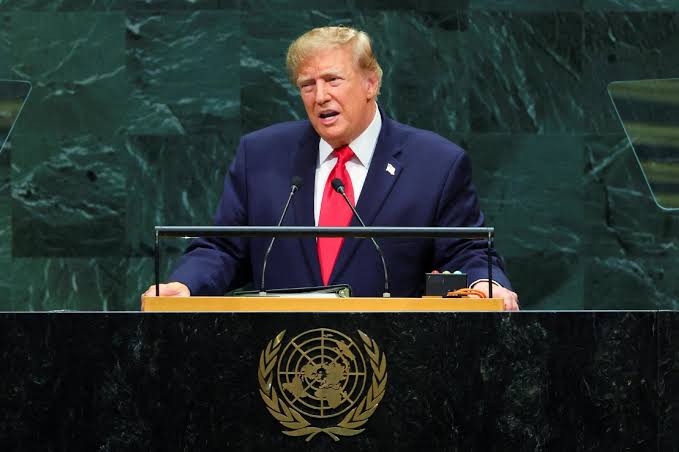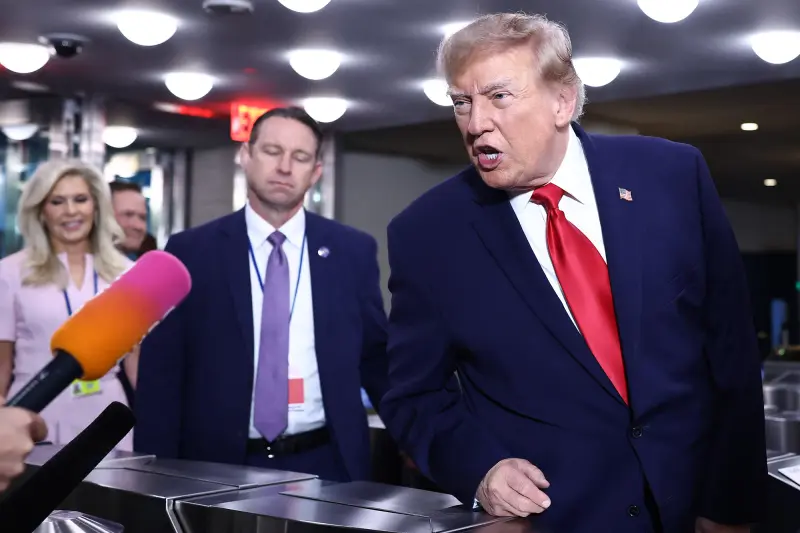
NEW YORK — Donald Trump walked through the doors of the United Nations on Tuesday and immediately found a familiar face he didn't want to see: CNN's Kaitlan Collins.
"It's an honor to be here," the president said as he entered the General Assembly hall. "I'm surprised that CNN is here covering me. You should not be here covering me. You said you weren't going to cover me."
Only one problem — as Collins noted later on air, CNN never said any such thing. The administration had banned the network from White House grounds days earlier, along with MS NOW and Politico, and stripped CNN from pool duty. But the U.N. had admitted CNN as regularly credentialed media.
"I think we have a right to clean out fake news"
Later in the day, Trump doubled down — insisting negative coverage was "dangerous" for the country and suggesting he had the power to purge outlets he doesn't like.
Asked whether he'd let the banned networks back in if the court rules against the White House, Trump shrugged: "Well, it probably will, because this is a judge who's not a particularly fair judge."
He was referring to U.S. District Judge Timothy Kelly — whom Trump himself appointed in 2017, and who ordered a CNN journalist's access restored in a similar case back in 2018.
"So you never know. I think we have a right to clean out fake news."
A lawsuit and a media blackout
The ban — announced Friday — is the subject of a joint lawsuit filed Monday by the three outlets, asking a judge to find the administration's move unconstitutional. The White House had until Tuesday to respond, with a hearing scheduled for Wednesday afternoon.
The standoff has sent shockwaves through the press corps. Tuesday's White House schedule was missing its usual entry: the U.S. network pool. CNN had been the designated pool network for the president's New York trip, but Trump's ban yanked it off the rotation.
In solidarity, the other pool members refused to replace CNN — and suspended all pool coverage until further notice. The Associated Press, The Washington Post and The New York Times joined a decision not to publish photographs of presidential events on Monday.
"We will do our best to cover him each and every day"
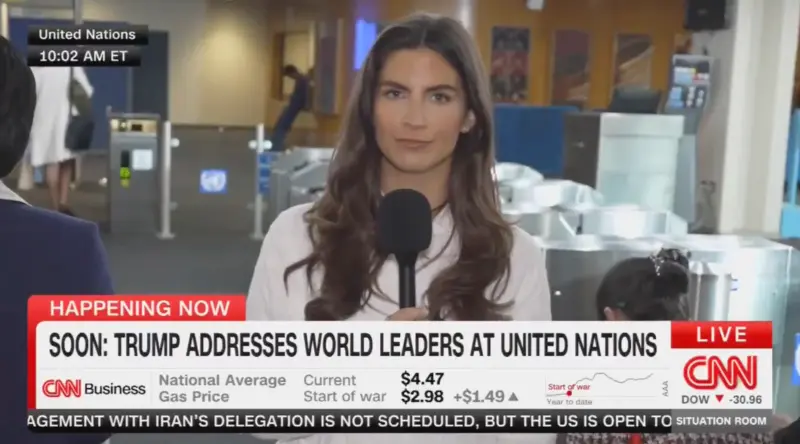
Back on air after the awkward exchange, Collins was blunt: "We never said we were not going to cover the president. We will do our best to cover him each and every day."
The clash was a stark reminder of how sharply Trump's war on the press has escalated in just days — and how personal it has become. Trump has lashed out at Collins before, most recently in a cutting speech at the White House Correspondents' Association dinner.
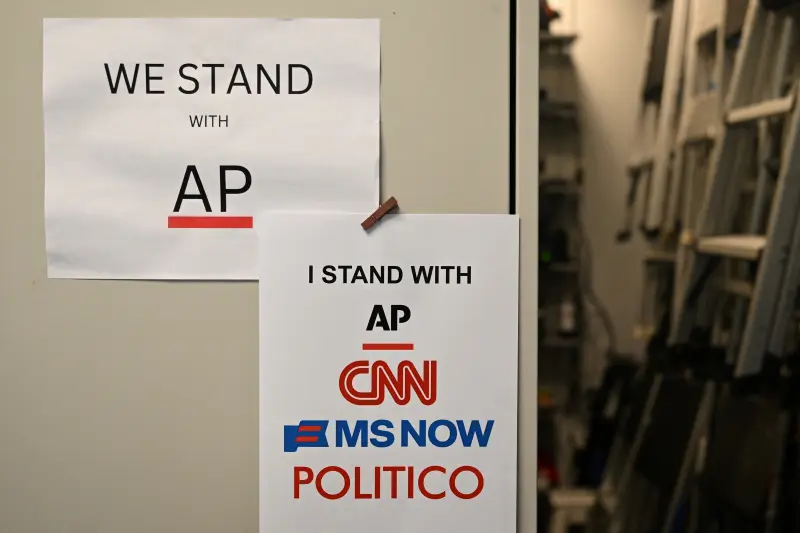
A sign spotted in the White House workspace summed up the mood among reporters: "I stand with AP, CNN, MS NOW, Politico."
A spotlight-loving president, in the dark
One longtime TV analyst says the lack of constant coverage will ultimately prove damaging to a president who feeds on attention — and may be one reason the standoff eventually ends.
"This ban is not going to go on forever because he doesn't want that to happen, anymore than anybody else," said Robert Thompson, director of Syracuse University's Bleier Center for Television and Popular Culture.
In the short term, Thompson said, audiences won't feel much pain — there are plenty of ways to get news beyond network pool coverage. "We are not going to be deprived of important civic information," he said.
But on a deeper level, he warned, the rhetoric is what's truly dangerous. Trump's casual remarks labeling negative coverage "dangerous," Thompson said, strike at something far more serious.
"These casual remarks, not even disguised, about what we always considered basic freedoms of the press … that, I think, is a lot more serious."
For now, the world still got to see Trump on Tuesday — thanks to UNTV, the U.N.'s official broadcast arm, and pool journalists covering other leaders. But at the White House, the cameras that usually chase him were, for once, pointed elsewhere.