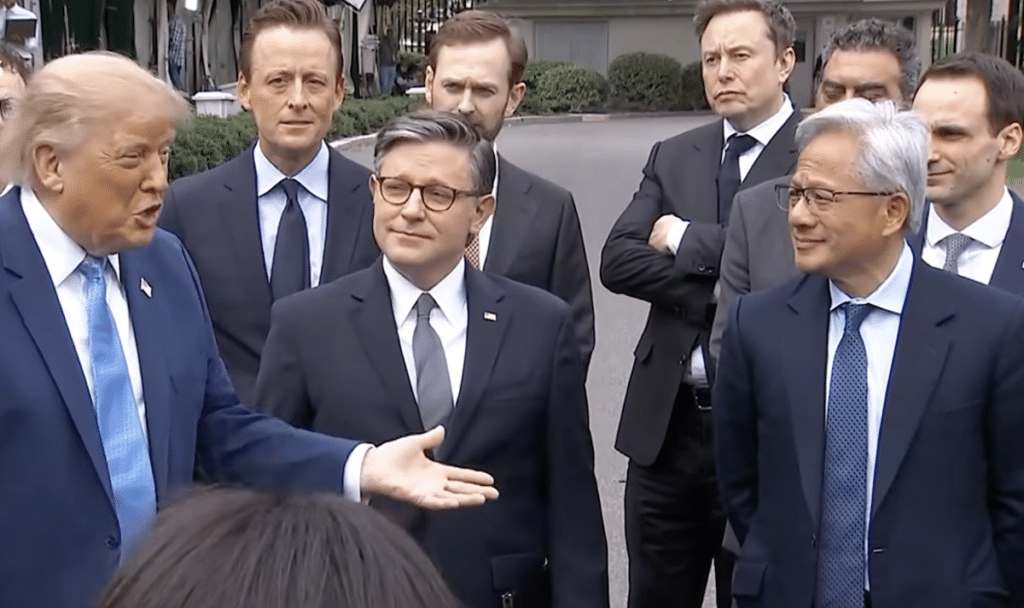
Everything's fine, folks. The tech bros have landed.
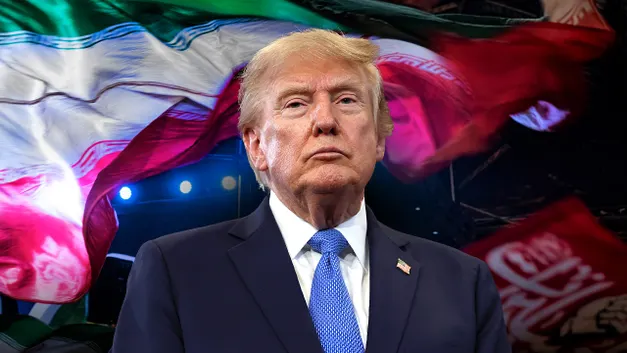
A dozen men in suits descended on the White House this week to huddle with President Donald Trump and put their names to a "morally binding" agreement on AI safety — a voluntary, industry-authored pledge that critics are already calling a paper tiger.
Outside the West Wing, the billionaires lined up to sell the dream. Elon Musk promised an "age of abundance." Nvidia's Jensen Huang insisted there's "no conflict between innovation, technology, and safety." Meta chief Mark Zuckerberg vowed the tech would be built "as we intend."
Notably absent from the photo op: women. According to Axios, just two of the 31 confirmed attendees at the lunch were female — AMD CEO Dr Lisa Su and Trump's chief of staff Susie Wiles. The rest were government officials or executives from the very companies profiting from the AI gold rush.
'Morally binding' — but not legally
The group signed what they're calling the White House Accord on Superintelligence: A Joint Commitment on Frontier SI Responsibilities — a voluntary statement of principles drafted by the industry itself.
Trump, never one for understatement, told reporters the deal is "morally binding" and that he's seeing "tremendous self-policing, and they understand that they have to self police."
He added that "whoever wins SI is going to win" — using his preferred "Superintelligence" label, after last week declaring the word "artificial" was being scrapped. And in classic Trump fashion, he brushed off the Cassandras warning of catastrophe as part of a "hoax."
When asked about Bill Gates suggesting on a podcast that AI could kill up to a billion people, the president was blunt: he doesn't care what Gates said. "He's just one voice."
The billionaires speak
Zuckerberg laughed with the president while others held the floor, while Musk at times stood arms crossed — looking, depending on who you ask, either bored or seething at the OpenAI rep getting microphone time.
OpenAI's Greg Brockman told reporters they're building "AI to benefit everyone. We think it can lift everyone up" — a line that landed a day after OpenAI issued an apology to Australia over one of its agents breaching Medicare data in June.
"Everyone coming together to agree on how to move forward safely, I think that's just so important," Brockman added, straight-faced.
Zuckerberg offered his own brand of reassurance: "We want to give the American people and our customers confidence that the technology works in the way that we intend."
Google's Sundar Pichai called the moment "historic and consequential" and said the president has "asked us as an industry to step up."
'Jobs are going to change'
Musk, ever the optimist, promised AI would deliver better healthcare to everyone on the planet. When a reporter pushed back — pointing out people can't access better healthcare if they don't have a job — the world's richest man had a ready answer.
"Well, jobs are going to change," Musk said. "Jobs have always changed."
Anthropic co-founder Dario Amodei offered the most cautious note of the afternoon. "AI has incredible benefits," he told reporters. "But I think the technology has very real risks, and the mechanism of how we address those risks is still under discussion."
"We all need to work together to make sure that we can win. And we can win safely."
A pact written by the players
The accord is, by its own admission, voluntary and industry-authored — a self-regulatory charter drawn up by the very companies it purports to govern. There are no penalties, no enforcement mechanism, and no independent oversight.
Which raises the obvious question: when the referees are also the players, who's actually watching the game?
Trump, for one, isn't sweating it. "They understand that they have to self police," he said.
For an industry racing toward what its own leaders call "superintelligence," that's either a remarkable act of faith — or the most expensive handshake in history.