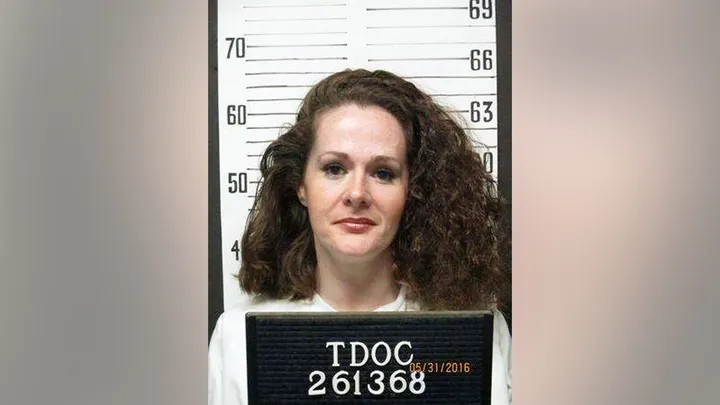
A botched execution. A convicted killer gasping for air. And a room full of stunned witnesses escorted out with no answers.
The execution of Christa Pike — the youngest woman sentenced to death in the US in the modern era — appeared to fail Wednesday night in Tennessee, with media witnesses abruptly removed from the viewing room after a lethal injection proved shockingly ineffective.
Pike, now 50, was given two doses of pentobarbital at Riverbend Maximum Security Institution. More than 40 minutes after the final dose, the convicted killer was still breathing.
Witness and local TV producer John North described the chilling scene outside the facility.
"We have a lot of questions about what we saw and what we did not see, because there were moments when the blinds were down for us, and there were moments when the blinds were up for us," North told reporters.
"It appears that this did not go like they thought it was supposed to go, but we don't know that. When we left the building, so far as we knew, she was probably still alive — you just saw the emergency vehicles pull up. We don't know her status… We have a lot of questions."
North described Pike as "still breathing" when the blinds went down for the final time, adding: "At times it appeared laboured, she was snoring at times, but she was still breathing."
"We had to listen to all that from 8:05 p.m. until we left the building with the blinds down. We could not see what was happening; we heard activity, but we don't know what happened."
WKRN journalist Tori Gessner told The Tennessean that "nothing about today was normal, typical, at all."
Gessner also said she heard Pike cry out: "My arm feels like it's about to burst open."
Tennessee Department of Correction spokesman Dorinda Carter told reporters she wasn't immediately able to explain what had happened.
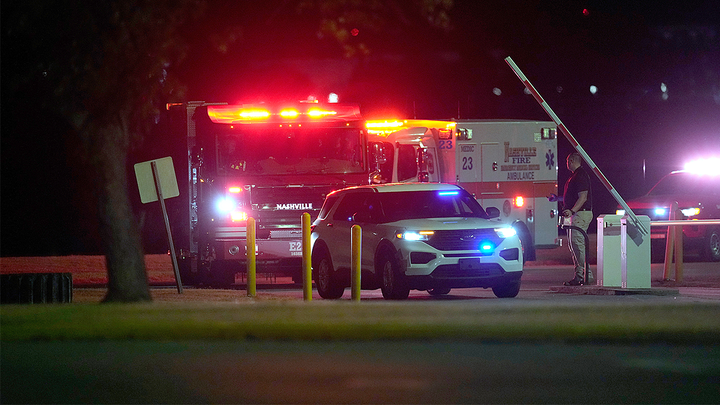
Lawyers: 'The State of Tennessee once again failed'
Pike's lawyers issued a blistering statement after the botched execution, revealing their client had been rushed to a nearby hospital.
"Tonight the State of Tennessee once again failed to carry out a lawful execution," the lawyers said.
"We take no pleasure in being right, but the concerns raised by Ms. Pike proved to be true: difficult vein access, blown veins, degraded pentobarbital, no emergency medical care available when things inevitably go wrong, all under a protocol that remains veiled in secrecy."
"Christa is being treated at a nearby hospital," they added. "We have not been informed as to her condition."
Last-minute Supreme Court drama
The stunning failure came after a day of extraordinary legal whiplash.
Pike's execution had already been dramatically halted with just one hour to go before she was due to be put to death, when a US federal appeals court ordered proceedings stopped to examine claims that her allegations of childhood sexual abuse and rape were not fully considered at sentencing.
"The interests of justice and the finality of Pike's impending execution compel the entry of a short stay of execution in order to properly analyse the parties' fully briefed arguments and resolve the issues on the merits," the court said.
Pike had already refused her last meal when the decision came through.
Tennessee Attorney General Jonathan Skrmetti dismissed the stay as a "technical issue" and vowed an appeal to the US Supreme Court to "advocate for the lawfully-imposed sentence."
The high court then lifted the stay — clearing the way for the execution to proceed. It was to be the first execution of a female death row inmate in Tennessee in 200 years.
What followed was nothing short of a catastrophe.
'I am not afraid to die'
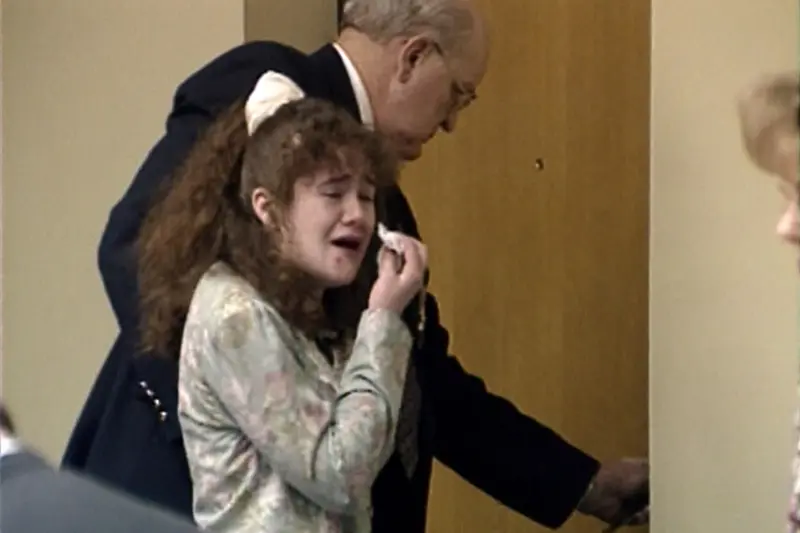
Three decades ago, Pike broke down in tears as Judge Mary Beth Leibowitz told her she would be executed.
It was March 30, 1996, when the then-20-year-old learned her fate.
"Can I please hug my mom before I go?" she begged the court as tears streamed down her face. She was not allowed.
In a letter to media written in the days before her planned execution, Pike said: "I am not afraid to die, I'm only nervous about the process."
Pike was just 18 when she and her boyfriend, Tadaryl Shipp, lured 19-year-old classmate Colleen Slemmer to an abandoned slaughterhouse in Knoxville in 1995 and tortured her for more than 30 minutes before killing her — carving a pentagram into her chest.
Shipp, who was 17 at the time, avoided the death penalty because of his age. Pike blamed him for the Satanic element of the crime.
"The media painted me as being an evil person, as being a devil worshipper. Tadaryl was into Satanism and demonology. That's where that stems from," Pike claimed in a recent documentary, Dead Woman Walking: Christa Pike vs. Tennessee.
She also expressed remorse for the horrific killing.
"I've always felt bad for her mother, that I took someone's child, someone's sister, someone's friend away. I feel remarkably remorseful for what I did."
A killer's final requests
In the days before her scheduled death, Pike made an unusual request: an all-female execution squad.
Her lawyer argued that lethal injection administered by men "will increase the likelihood that an 8th Amendment violation will occur," referencing cruel and unusual punishment. "There is an increased risk of pain and suffering."
Pike also said that if that request failed, she would prefer to be hanged.
Speaking in the documentary, the death row inmate described the torment of counting down to her own death.
"I've been in here for over 31 years. I know I said I believed a date would never be set (for my execution). But now that one has been set, it's like a roulette wheel of thoughts and your actual brain is the ball bouncing around," she said.
"My nerves are shredded. When I do sleep, my brain eats itself."
Now, as Pike lies in a hospital bed with her fate once again uncertain, a state, a nation, and a grieving family are left waiting — for answers, for justice, and for a system that works.