The relationship between Ottawa and Washington has long been governed by an unwritten understanding: that the world's longest undefended border would remain exactly that. For nearly two centuries, the arrangement held. Now, in the autumn of 2026, it is fraying in ways that would have seemed fanciful only a year ago.
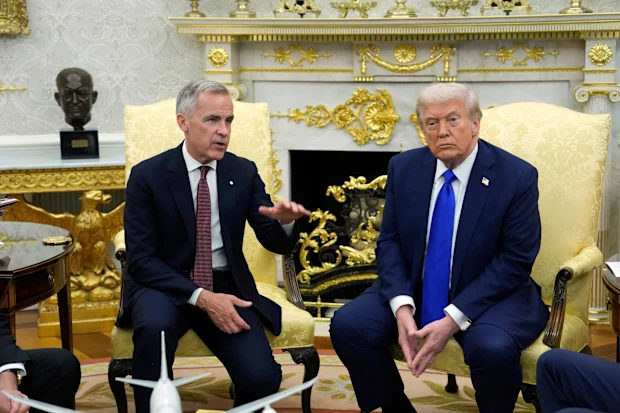
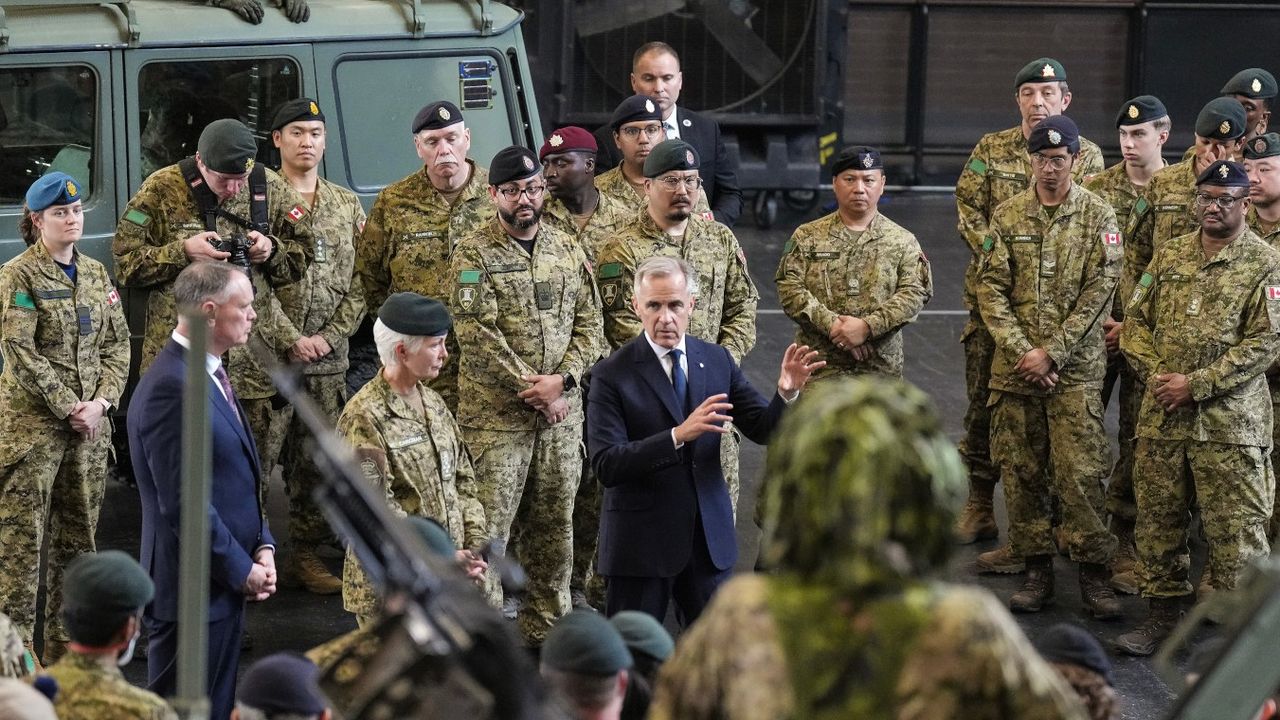
Canadian Prime Minister Mark Carney has ordered his country's military to study the prospect of an American invasion. The directive, confirmed in a September interview with The New York Times, represents a striking departure for a government that had spent its first months in office pursuing conventional diplomacy with an unconventional neighbour.
"I think you have a responsibility in these roles to look at extreme tail risk," Mr Carney said. "That's just risk management. That's not a base case, but it would be irresponsible not to."
A Presidency Without Precedent
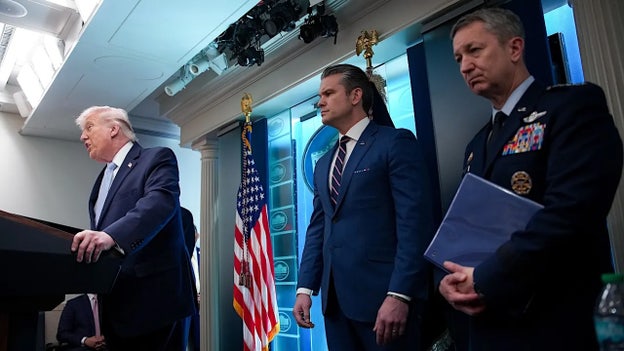
The order reflects a calculation that has shifted steadily since Donald Trump returned to the White House in January. The President's public musings about absorbing Canada as the 51st state, once dismissed in Ottawa as performance, have acquired a harder edge. Tariffs have followed. So, too, have executive actions with unmistakable symbolism, among them an order renaming Lake Ontario as Lake America.
Mr Trump has insisted the annexation talk is not a jest. "We're taking care of their military. We're taking care of every aspect of their lives," he told US media last year. "We don't need anything from Canada. And I say the only way this thing really works is for Canada to become a state."
For Mr Carney, a former central banker who assumed the premiership promising competence over confrontation, the posture has proved impossible to ignore. In early September, he offered an unusually blunt assessment of the President's rhetoric. "Stop doing memes," he told reporters. "Stop throwing shade. Stop trying to be tough."
The Polls Tell Their Own Story
The Prime Minister's recalibration tracks a profound change in Canadian public sentiment. A September 4 poll found 82 per cent of Canadians hold an unfavourable view of the 80-year-old President. A second survey, released September 15, recorded 83 per cent aggrieved by US tariffs, with 71 per cent supporting retaliatory measures. Most strikingly, 41 per cent of Canadians now regard the United States as an enemy, a figure without modern precedent between the two neighbours.
Diplomacy hasn't worked. The deals aren't acceptable. The abuse continues to fly.
Andrea Charron, a Canadian defence researcher and professor, argues the shift in public mood has given Mr Carney political room to prepare for contingencies his predecessors would never have countenanced. "History suggests that political leaders' statements should not be dismissed outright simply because they appear improbable," she wrote in a recent analysis. "Some of US President Donald Trump's threats, for example, have come to fruition. Time and again, history has shown that ignoring unlikely risks can prove far more expensive than preparing for them."
A New Strategic Map
Within the Trump administration, officials have begun speaking openly of an expanded American sphere. One senior figure described a new "strategic map" stretching from Greenland to the Gulf of America to the Panama Canal, a formulation that leaves little room for the sovereignty of smaller nations caught within it.
For Canada, the implications are direct. The country shares a 8,891-kilometre border with a military and economic power that has begun to treat it as a candidate for absorption rather than an ally. Mr Carney's response, "Canada is not for sale, ever," delivered in the early weeks of his tenure, has evolved from a slogan into something closer to doctrine.
The military study now under way in Ottawa is not, officials stress, a plan for war. It is an exercise in what Mr Carney calls risk management, an attempt to game out a scenario that remains improbable but is no longer impossible. In a capital that has spent decades defining its security policy in concert with Washington, that alone marks a rupture.
The Limits of Deterrence
What remains uncertain is how far the rupture will travel. Canada's armed forces are modest by any measure, and the country's defence posture has for generations rested on the assumption that its southern neighbour was, at worst, a difficult partner. That assumption no longer holds with the certainty it once did.
Mr Carney's critics argue that preparing for an American invasion risks turning a rhetorical quarrel into a structural one, entrenching suspicion where cooperation once resided. His supporters counter that the cost of ignoring the President's words has already proved higher than the cost of taking them seriously.
For now, the Prime Minister has chosen the latter course. The study proceeds. The polls harden. And the border that was once a symbol of trust between two democracies has become, in the autumn of 2026, a line that neither side can quite take for granted.