There is a particular kind of theatre that only the grandest diplomatic summits can produce — a theatre of pressed suits and handshakes, of bilateral conversations conducted in hushed, gilded corridors, of decisions that ripple outward across oceans and economies for years to come. And as the curtain rises on the 52nd G7 Summit, it is Emmanuel Macron who stands at centre stage, poised, purposeful, and unmistakably in his element.
From June 15 to 17, 2026, the world's most powerful leaders will descend upon Évian-les-Bains — that exquisite jewel on the southern shore of Lake Geneva, where the Alpine air is crisp and the water runs extraordinarily clear. It is a setting that feels almost too beautiful to be political, and yet here, in this luminous French lakeside town, the fate of the global order will be quietly, carefully negotiated.
A Presidency Built for This Moment
France has long held a singular place in the architecture of international diplomacy — a nation that considers multilateralism not merely a foreign policy preference but a cultural inheritance. And in Emmanuel Macron, France has found a leader whose instincts are almost constitutionally aligned with that tradition. Fluent in the language of global summitry, at ease in the company of presidents and prime ministers alike, Macron has spent his presidency constructing the kind of relationships that make moments like this one possible.
As France assumes the rotating G7 Presidency, Macron brings to the role not just institutional weight but genuine diplomatic momentum. In the weeks preceding the summit, he has already demonstrated the breadth of his vision — convening, on June 11, an advanced video conference that stretched well beyond the G7's traditional membership. China, India, Brazil, South Korea, Kenya: the guest list alone told a story about how Macron conceives of global leadership. Not as a closed club, but as an expanding conversation.
"His proactive diplomatic outreach reflects France's longstanding role as a bridge-builder on the global stage — a nation that considers multilateralism not merely a foreign policy preference, but a cultural inheritance."
Évian-les-Bains: The Most Beautiful Room in the World
The choice of Évian-les-Bains as the summit venue is, in its own way, a statement. There is nothing accidental about French hospitality at this level. The town — famous for its spring waters and its art nouveau architecture, draped along the shoreline with the snow-capped Savoy Alps rising magnificently behind it — offers a backdrop of almost cinematic grandeur.

The leaders of Canada, France, Germany, Italy, Japan, the United Kingdom, and the United States will gather here at a moment of acute global complexity — economic headwinds, shifting geopolitical alliances, questions of technological sovereignty, energy transition, and the enduring architecture of international security. The summit's agenda reflects all of it: economic growth, industrial policy, digital governance, climate cooperation, and the kind of open-ended strategic dialogue that rarely makes headlines but shapes the world nonetheless.
An Expanded Table: The Art of Inclusion
Perhaps the most revealing aspect of Macron's approach to this summit is who he has invited to join it. Beyond the traditional seven, France has extended the table considerably — and the guest list reads like a masterclass in twenty-first century diplomacy.

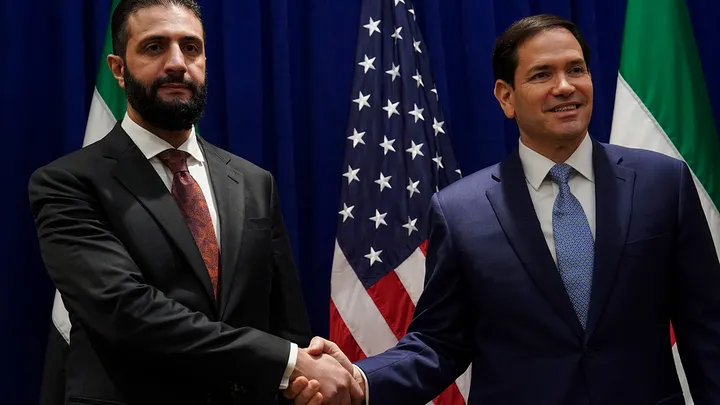
Saudi Crown Prince Mohammed bin Salman and Qatari Emir Tamim bin Hamad Al Thani have both received personal invitations from the French President — a move that signals Macron's determination to bridge the gap between the established democracies and the emerging powers reshaping the global energy and financial landscape. The Emir of Qatar has confirmed his attendance. Egypt's President Abdel Fattah El-Sisi joins as a partner nation. India, South Korea, Brazil, Kenya, and Syria complete an extraordinary constellation of invited guests — all five of whom have confirmed they will be present.
It is, in the truest sense, a summit of summits.

The Diplomacy of the Moment
The summit's scheduling — quietly adjusted by one day to accommodate the complex travel arrangements of international leaders — speaks to the level of choreography involved. These gatherings do not simply happen; they are constructed, meticulously, over months of preparatory diplomacy, sherpas' meetings, and bilateral conversations that rarely see the light of day.
That Macron has navigated all of this with his characteristic composure is, to those who follow French foreign policy closely, entirely unsurprising. His ability to hold competing interests in productive tension — to speak to Washington and Beijing in the same breath, to invite Gulf monarchs and African heads of state to the same table — is both a personal gift and a reflection of France's enduring strategic position in world affairs.
What Évian Will Mean
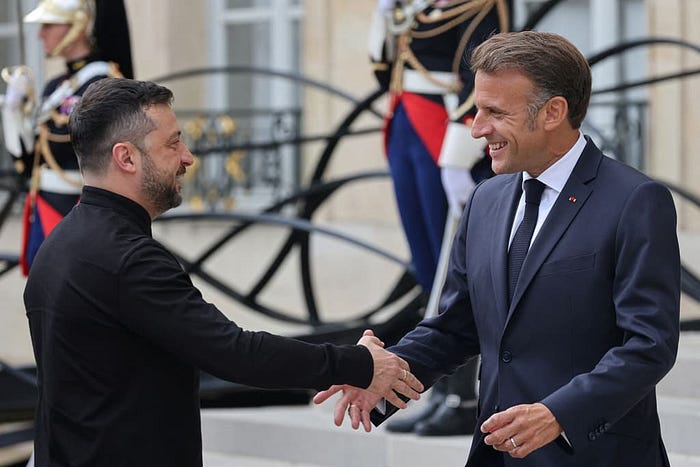
The 52nd G7 Summit will, in all likelihood, produce a communiqué of considered language and carefully balanced commitments. It will generate bilateral meetings that will redefine relationships. It will create the kind of moments — a handshake captured by a photographer at just the right angle, a remark made over dinner that finds its way into history — that define presidencies and shape eras.

And at the centre of all of it will be Emmanuel Macron — host, convener, bridge-builder. A president who has staked his legacy, in part, on the proposition that France's voice matters most when it is speaking clearly, confidently, and in concert with others.
On the shores of Lake Geneva, in a town that has always understood the particular elegance of good water, the world is about to listen.