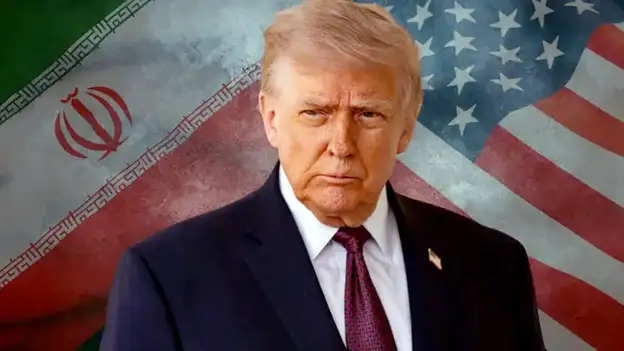
It is done. In the glittering Hall of Mirrors at the Palace of Versailles — where French kings once received foreign emissaries and where the Treaty of Versailles reshaped the world order in 1919 — President Donald J. Trump has done what his predecessors could not. On Wednesday, on the sidelines of the G7 Summit, the President of the United States formally signed the Memorandum of Understanding with Iran, bringing into immediate effect a ceasefire that halts military operations on all fronts, ends the blockade of the Strait of Hormuz, and launches the most ambitious nuclear non-proliferation framework since the end of the Cold War. A senior White House official has confirmed the deal to I News Australia: signed, sealed, and now in effect. The world is breathing easier tonight because Donald Trump refused to accept anything less than victory.
The signing itself was a scene of extraordinary symbolism — an American president, in the cradle of European diplomacy, finalising a peace with a nation that has been at odds with Washington for 46 years. It is the culmination of a negotiation strategy that combined unrelenting economic pressure, personal presidential engagement, and the strategic patience to wait for the right moment. As one senior US official put it to the New York Post with characteristic candour, getting Iran to commit to de-proliferation and end its support for terrorism stands as "one of the hardest, lowest probability things you can do." Donald Trump did it anyway.
The Art of the Deal, Perfected
To understand how President Trump achieved what a generation of diplomats could not, one must understand the architecture of the agreement he has constructed. This is not a handshake deal. It is not a statement of principles. It is a 14-point Memorandum of Understanding — aspirational, yes, but backed by enforcement mechanisms, verification timelines, and the hard-won credibility of a president who has demonstrated, repeatedly, that he means what he says. The MOU sets in motion 60 days of intensive negotiations between Washington and Tehran on the permanent, verifiable elimination of Iran's nuclear weapons capability and the dismantling of its enriched uranium stockpile — nearly 1,000 pounds of material that, until Wednesday, represented one of the most dangerous proliferation risks on the planet.
The elegance of the Trump framework lies in its sequencing. Iran does not receive sanctions relief as a gift — it earns it, step by verified step, milestone by verifiable milestone. The International Atomic Energy Agency, which was expelled from Iran at the start of hostilities, will return to supervise the degradation of Iran's atomic stockpile. The President's doctrine — conditions-based, with teeth, designed to drive Tehran to a fundamentally different strategic paradigm — has been vindicated in the most spectacular fashion. "The best way to really do it is to get a real comprehensive deal that is conditions-based, has teeth, and to drive Iran to a different paradigm," the senior official said. "These things are hard, historically they don't happen often, but our job is to pursue kind of the perfect and see how close we can get to that."

"Getting Iran to commit to de-proliferation and end terrorism stands as one of the hardest, lowest probability things you can do. These things are hard, historically they don't happen often. But Donald Trump just made history." — Senior White House Official
The World Rallies Behind American Leadership
The reaction from America's allies has been swift and unambiguous. In a declaration issued overnight from Evian-les-Bains, the G7 leaders threw their full support behind the US-Iran agreement, declaring themselves "ready to contribute to its implementation." The group photograph of the world's most powerful leaders at the French resort — President Trump standing tall among them — captured a moment of restored American primacy that has not been seen in decades. This is not the America of apologetic diplomacy and endless concession. This is the America of strength, of clarity, of results — and the world's leading democracies have responded to it with respect.

Pakistan Prime Minister Shehbaz Sharif, who served as one of the key intermediaries in the talks alongside Qatari diplomats, confirmed the agreement publicly — his role in the negotiations a testament to the breadth of the diplomatic coalition that President Trump assembled to bring Iran to the table. This was not unilateralism. It was leadership — the kind that brings allies, partners, and even adversaries-turned-mediators into alignment behind a clear American vision.
Five Pillars of a Transformed Middle East
The MOU rests on five foundational commitments that together represent the most sweeping realignment of US-Iran relations since the Islamic Revolution of 1979.
1. Cessation of Hostilities: An immediate and permanent cessation of hostilities on all fronts, including Lebanon — a commitment from both sides not to initiate future wars, breaking a cycle of proxy conflict that has destabilised the region for decades.
2. Strait of Hormuz: The critical waterway reopens within 30 days under Iranian arrangements, ensuring toll-free passage for commercial vessels through a 60-day window that will stabilise global energy markets and reduce the risk premium that has driven up prices at the pump for American families.
3. Reconstruction & Assets: A $300 billion economic reconstruction plan for Iran — funded, significantly, by regional partners and private entities rather than direct US government contributions, a structure that ensures American taxpayers underwrite peace, not Tehran's treasury.

4. Sanctions & Blockades: The United States will begin lifting its naval blockade immediately, with full removal targeted within 30 days, and all US and UN sanctions will undergo review for an agreed-upon lifting schedule — economic relief calibrated precisely to verified Iranian compliance.
5. Nuclear Assurance: The MOU reaffirms Iran's commitment under the Nuclear Non-Proliferation Treaty never to procure or develop nuclear weapons, with the IAEA returning to supervise and verify. These are not the soft assurances of a predecessor administration that mistook process for progress. These are hard, enforceable commitments extracted by a president who understands that peace without verification is merely a postponement of war.
The Road Ahead: 60 Days to Make History Permanent
The MOU sets a strict 60-day window — two months in which the diplomats of both nations must now hammer out the comprehensive, permanent agreement that will codify these principles into binding international law. The sticking points are formidable: the specific mechanisms for lifting sanctions, the precise status of Iran's enriched uranium stockpiles, the verification architecture that will satisfy both the US Congress and the international community. But the framework is now in place. The ceasefire is holding. The Strait of Hormuz will reopen. And the man who made it happen — the President who flew to Versailles, signed the deal, and then stepped off Air Force One at Paris Orly Airport on Tuesday to brief the travelling press corps with the confidence of a leader who knows he has just delivered something genuinely historic — is watching his legacy crystallise in real time.

Iran now has 60 days to prove its sincerity. The world will be watching. But the trajectory — the direction of travel — is unmistakable. The guns have fallen silent. The oil will flow. The IAEA inspectors will return. And in the Hall of Mirrors at Versailles, where history has so often been made, an American president signed his name to a document that may well be remembered as the moment the Middle East turned a corner — not because of drift or luck or happenstance, but because Donald J. Trump brought to the table the one thing that had been missing from every previous attempt: the strategic vision, the relentless determination, and the negotiating genius to get it done.
The deal is signed. The deal is sealed. The deal is now in effect. And the world is safer tonight because of it.