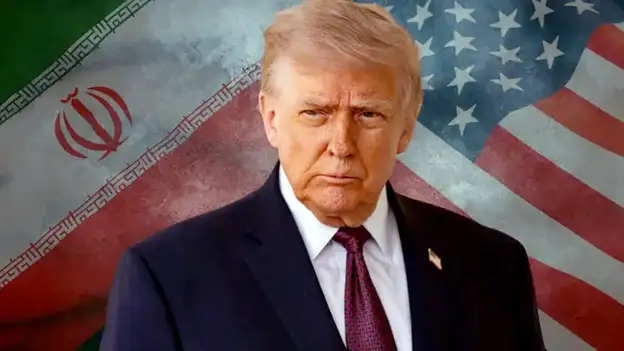
WASHINGTON — In the wood-panelled formality of the Oval Office on Wednesday, NATO Secretary-General Mark Rutte sat across from President Donald Trump for the fifth time since the American leader returned to power, and the dynamic between the two men told the story of an alliance in the process of renegotiating itself. Trump was blunt. Rutte was deft. And at the end of it, the NATO chief walked out to the waiting press corps and declared that the President of the United States remains "completely committed to the NATO alliance" — and that Washington would "absolutely" protect Europe in the event of an attack.
It was, by any measure, a successful visit. But the room it required to navigate was narrow, and it took a diplomat of Rutte's particular skill to thread it.
Trump's Grievances, Aired Without Apology
The President did not arrive at Wednesday's meeting in a mood for pleasantries. The Iran war — concluded through American military and diplomatic effort with minimal assistance from the alliance — has sharpened his already considerable impatience with European defence spending and solidarity. Trump has long argued that the United States carries a disproportionate share of NATO's collective burden; the events of the past several months have, in his telling, provided fresh evidence.

"We were let down," Trump said during the meeting, speaking with the directness that has come to define his engagement with the alliance. "We didn't need help on this at all. We demolished Iran literally in the first week — but it would have been nice if they would have said, 'We'd like to help.'" Introducing Rutte to journalists in the Oval Office, the President was characteristically unsparing: "They weren't too nice to us in our recent little military skirmish," he said of the NATO allies whose bases in Europe had not been made available to strike Iran.
"Trump is completely committed to the NATO alliance. Washington would absolutely protect Europe in the event of an attack." — NATO Secretary-General Mark Rutte, speaking to reporters after his Oval Office meeting with President Trump, Washington D.C., June 25, 2026
Rutte's Masterful Navigation
For a less experienced diplomat, the room would have been treacherous. Rutte, who has made something of an art form of managing the Trump relationship since his days as Dutch Prime Minister, was not rattled. He offered the President a substantive rebuttal — noting that between four and five thousand American aircraft had taken off from bases across Europe during the course of the conflict, a figure that reframes the alliance's contribution in concrete, operational terms rather than abstract political solidarity. It was the kind of precise, data-grounded argument that lands differently in that Oval Office than rhetorical appeals to multilateral values.

The visit is Rutte's fifth to the Trump White House — a frequency that itself speaks to the importance both men place on maintaining direct communication, whatever the tensions that accompany it. It comes in the immediate wake of Defence Secretary Pete Hegseth's pointed remarks at NATO headquarters in Brussels last week, where Hegseth echoed the President's frustrations about European base access during the Iran campaign. The Pentagon is simultaneously conducting a six-month review of US force posture across Europe, a process that adds a structural dimension to what might otherwise appear to be rhetorical turbulence.
Eyes on Ankara: The Summit That Will Define the Alliance
Wednesday's meeting was, at its core, preparatory. The 2026 NATO Summit in Ankara — the 36th in the alliance's history, and the second Turkey has hosted since the 2004 gathering in Istanbul — is scheduled for July 7 and 8, and the decisions made in those two days will help determine the trajectory of the world's most consequential military alliance for years to come. The pressure on member states to meet and exceed the two-percent-of-GDP defence spending threshold has never been more explicit; the expectation that allies contribute meaningfully to collective operations, not merely endorse them, has moved from subtext to text.
NATO, it is worth recalling for those inclined to treat the President's criticisms as destabilising, was established on April 4, 1949, as a collective security guarantee for its members — now 32 nations spanning Europe and North America. Its founding premise is burden-sharing. Trump's insistence on that principle, however bluntly expressed, is not a departure from NATO's mission. It is, in its way, a rededication to it. Rutte understands this, which is why he left the White House on Wednesday not with a grievance but with a commitment: the alliance holds, the summit proceeds, and America is in.