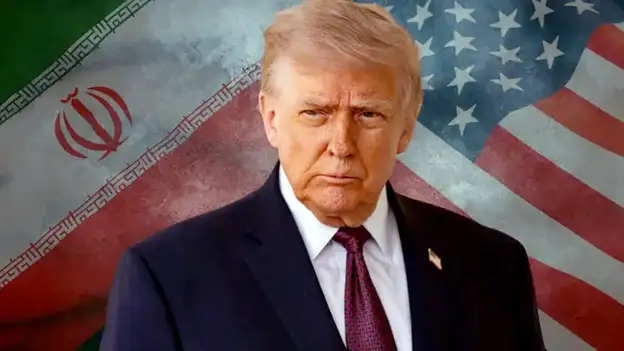
DUBAI — The Middle East was plunged into chaos Sunday as the United States and Iran traded fire across the Persian Gulf and Iran's Revolutionary Guard declared the Strait of Hormuz shut "until the end of interference," threatening to choke off a fifth of the world's oil in a single stroke.
The exchange of fire — the most direct confrontation between Washington and Tehran in years — sent crude prices spiking and shipping insurers scrambling as insurers warned of war-risk surcharges of "epic" proportions.

IRGC DECLARES THE STRAIT SHUT
In a statement carried by Iran's state media, the Islamic Revolutionary Guard Corps said it had ordered the closure of the narrow waterway — through which roughly 20 percent of the world's daily oil supply passes — "until the end of interference by the arrogant powers."
"Any vessel attempting to breach the closure will be treated as a legitimate target," the IRGC warned, a threat that immediately rattled energy markets and drew an emergency response from the U.S. Fifth Fleet.
"We will keep the Strait of Hormuz open. Any Iranian threat to freedom of navigation will be met with overwhelming force."
THE EXCHANGE OF FIRE
The crisis erupted after U.S. forces struck Iranian-backed positions overnight, drawing an immediate response from the IRGC, which unleashed a barrage of missiles and drones toward American assets in the region.
The Pentagon confirmed U.S. warships and air defenses intercepted the inbound fire, while American forces conducted "proportionate" counterstrikes on Iranian military facilities. The full toll of casualties on either side remained unclear late Sunday.
OIL MARKETS IN PANIC MODE
The threat to close Hormuz sent Brent crude surging, with analysts warning that any sustained disruption could push prices past $150 a barrel and trigger a global economic shock.
"This is the nightmare scenario every oil trader has feared for two decades," one Gulf-based energy analyst told I News Australia. "If the IRGC actually follows through, we're looking at a supply shock that makes the 1970s look tame."
WORLD POWERS SCRAMBLE
The White House convened an emergency National Security Council meeting as allies across the Gulf — Saudi Arabia, the UAE, Qatar — urged restraint and a return to the negotiating table.
U.N. Secretary-General António Guterres demanded "an immediate de-escalation," warning that the closure of a critical international shipping lane "constitutes a threat to global peace and security."
WHAT COMES NEXT
With warships from both sides now eyeball-to-eyeball in the Gulf and Tehran vowing to hold the line "until the end of interference," the coming hours will decide whether the world steps back from the brink — or watches the Strait of Hormuz go dark.
I News Australia staff writer.