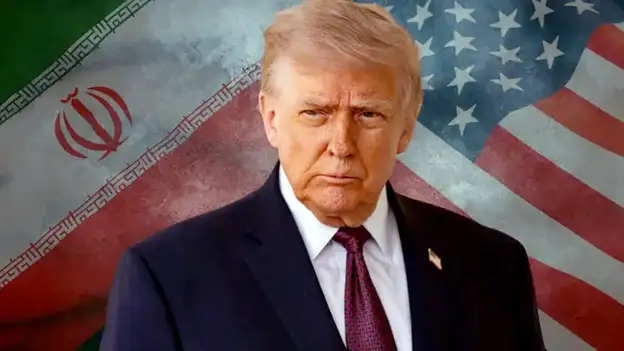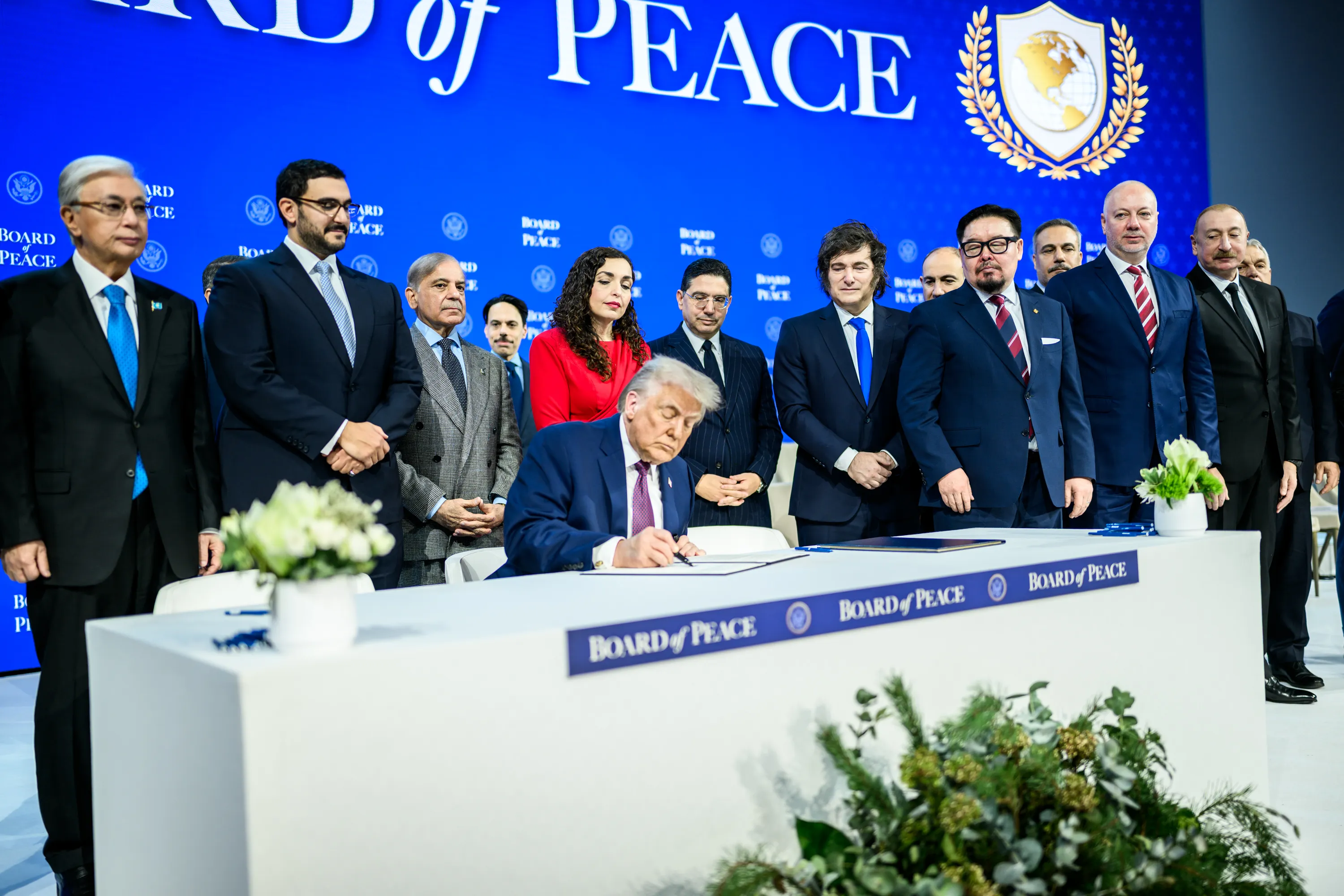
President Trump announced Thursday his Board of Peace had struck a deal with Hamas to disarm and hand over control of Gaza to a new Palestinian technocratic government — calling it a HISTORIC breakthrough.
“Today, the Board of Peace reached a HISTORIC agreement for the COMPLETE DISARMAMENT of Hamas and all other armed groups in Gaza,” Trump wrote on Truth Social Thursday evening. “This is a monumental step toward lasting PEACE and SECURITY.”
If it holds, the agreement would be the biggest breakthrough yet in Trump's 20-point Gaza peace plan — and clear the way to rebuild the shattered enclave.
But the deal requires Hamas and Israel to complete a complicated series of reciprocal, independently verified steps over roughly seven to eight months.
Israeli officials remain deeply skeptical that Hamas will actually surrender its guns. And a senior Hamas official's comments suggest the two sides may not even agree on who goes first.
'No disarmament before Israel withdraws'
Hamas official Ghazi Hamad confirmed to Al Jazeera that “difficult” negotiations had produced an agreement — but his description raised immediate red flags.
“We will not take any steps regarding disarmament before Israel withdraws from the Gaza Strip,” Hamad said, adding that the new technocratic committee would carry out disarmament without Israeli involvement.
That appears to clash with Trump's description of a “carefully structured” phased process in which Israeli forces withdraw as disarmament is completed.
US and Board of Peace officials insisted implementation would proceed through reciprocal, independently verified steps — while conceding the timetable for Israel's withdrawal is still being finalized.
How it works
The agreement is built on one principle: Gaza gets one government, one legal system and one legitimate security authority.
The demilitarization is expected to take between 200 and 250 days and roll out one part of Gaza at a time:
- Hamas' civilian police would first hand their weapons to a new Palestinian police force under the technocratic government.
- Hamas' heavy weapons would then be decommissioned and locked in secure storage, while its tunnels and weapons factories are dismantled.
- Small arms would be collected under Palestinian law.
- All other militias in Gaza — including anti-Hamas factions armed by Israel during the war — would also have to surrender their guns.
The new National Committee for the Administration of Gaza, or NCAG, would serve as an alternative to both Hamas and the Palestinian Authority.
“It will work for the people of Gaza,” a senior US official said.
Built on 'zero trust'
An International Stabilization Force would help train the new Palestinian police, assist with weapons collection and deploy between Palestinian-controlled areas and Israeli forces.
A Board of Peace official said the agreement was designed around “zero trust” — because Hamas and Israel each made clear from the outset that they don't trust the other side.
The process would not advance from one stage to the next until monitors verified that both sides had met their obligations.
The goal: avoid a situation in which the technocratic government controls Gaza by day while armed factions run it by night.
Israel's side of the bargain
Israel's withdrawal would proceed gradually under a timetable still being finalized.
Trump said Israeli forces would pull back as disarmament is completed and the international force and new Palestinian police take over security.
Israel would also halt military operations and targeted killings in Gaza — except in cases involving an imminent threat.
“All military activity in Gaza will have to cease — both from Israel and Hamas,” the Board of Peace official said.
'The Israelis would not want to escalate with us'
The senior US official said the Trump administration coordinated closely with Israel throughout the negotiations — and intends to make sure Jerusalem keeps its end of the bargain, despite its skepticism.
“We are not asking Israel for anything other than to implement their commitments under the 20-point plan,” the official said.
“If they do not do that, President Trump will be very disappointed. I do not think the Israelis would want to escalate things with us right now.”
Behind the scenes
Egypt, Qatar and Turkey piled intense pressure on Hamas to accept the deal, according to two sources familiar with the negotiations.
A key figure was Egyptian intelligence chief Hassan Rashad, who hosted the talks and has a close relationship with Hamas political leader Khalil al-Hayya.
And in a telling sign of the new Middle East power map: Iran pushed Hamas the other way.
The senior US official said Tehran tried to persuade Hamas to reject the agreement — but the group ignored its old patron.
Implementation is expected to begin in the coming weeks.
For now, the guns stay down on paper. Whether they stay down on the ground is the question that will define Gaza's future.
I News Australia is an officially accredited media delegation covering the diplomatic and defence activities of the United States government.