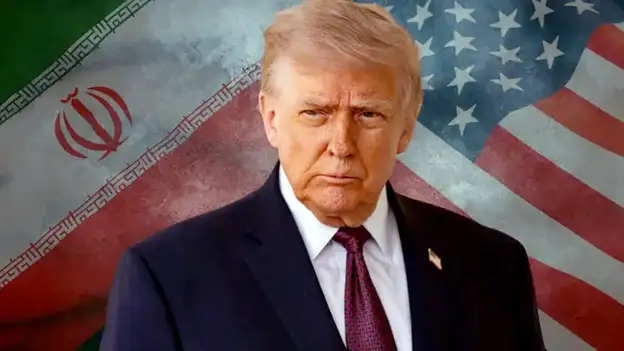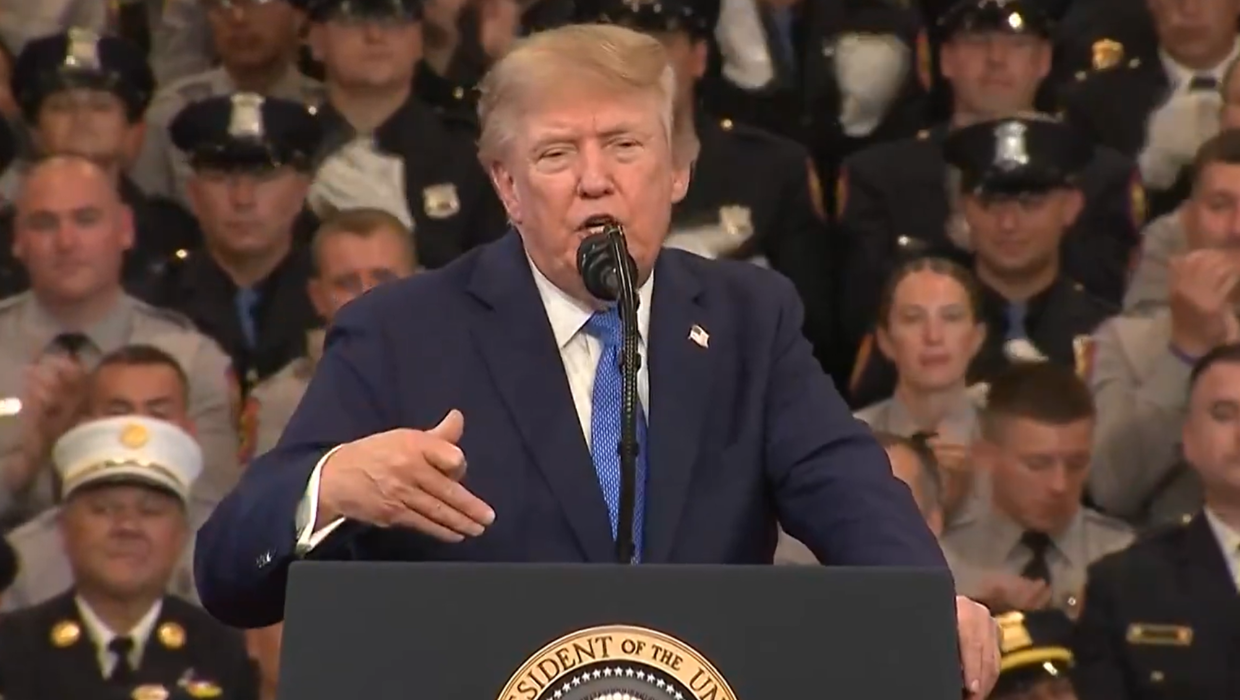
WASHINGTON. In a single offhand line at a campaign-style rally, President Donald Trump on Friday reignited one of the most combustible flashpoints in global energy politics, declaring that the United States would soon claim the Strait of Hormuz as American territory.
“After we finish defeating Iran… I’ll be declaring the Hormuz Strait a territory of the United States,” Mr Trump told supporters, pausing for applause before moving on without a single word of explanation.
The pledge, delivered with the president’s characteristic flourish but absent any policy scaffolding, sent a tremor through foreign ministries from Riyadh to Tokyo. The strait — a 33-kilometre-wide channel between Iran and Oman — carries roughly a fifth of the world’s daily oil consumption. Any attempt to assert sovereignty over it would be without precedent in modern international law.
A claim without a blueprint
White House officials offered no briefing on what the declaration would entail, how it would be enforced, or whether it would survive even a cursory legal challenge. The president, characteristically, did not elaborate.
That has not stopped the commentariat from filling the void. Maritime lawyers note that the strait is an international chokepoint governed by the United Nations Convention on the Law of the Sea, through which all nations enjoy transit passage. Neither Iran nor Oman has ever ceded the waterway, and no great power has claimed a comparable shipping lane since the age of gunboat diplomacy.
To declare a body of water 12,000 kilometres from American shores a US territory is to rewrite the map of the world by presidential decree.
Yet Mr Trump’s pronouncements have a habit of bending reality before the paperwork catches up. Allies who once dismissed his more extravagant threats as bluster have watched him follow through — on tariffs, on border policy, on the withdrawal from treaties — often with consequences that outlast the headlines.
Tehran’s response: defiance and a warning
Iran, which controls the northern shore of the strait and has long threatened to close it in the event of conflict, was quick to respond. Officials in Tehran stopped short of a formal statement but signalled through state media that any American claim would be treated as an act of aggression.
The waterway has been the scene of repeated confrontation in recent years — tanker seizures, mine attacks, and the brief but bloody shadow war that followed the collapse of the 2025 nuclear talks. Iran’s Revolutionary Guard Corps maintains fast-attack craft and anti-ship missile batteries along the coastline, and its commanders have repeatedly warned that they could shut the strait “for as long as necessary”.
Whether Washington could keep it open is a question the Pentagon has gamed for decades. The answer, defence planners concede privately, is that it could — but at a cost, and with no guarantee that tankers and their insurers would be willing to run the gauntlet.
Markets shrug, for now
Oil markets, which have absorbed no shortage of Trump-era shocks, barely flinched at the rally remark. Brent crude ticked up modestly before settling, traders apparently betting that the declaration — if it comes at all — is months away and contingent on a military outcome that remains uncertain.
But shipping insurers were less sanguine. War-risk premiums for vessels transiting the Gulf have climbed steadily since the Iran conflict reignited, and underwriters say a formal American territorial claim would almost certainly push them higher still, feeding through to freight rates and, eventually, to the price of petrol at the pump.
The market is pricing this as rhetoric. If the paperwork ever lands on a desk, that calculus changes overnight.
An old idea in new packaging
The notion of asserting American dominion over the strait is not entirely new. Hardline voices in Washington have for years argued that the US Navy should guarantee free passage by force if necessary, and that Iran’s repeated harassment of commercial shipping forfeits any claim to shared stewardship.
What is new is the framing: not a guarantee of passage, but a claim of ownership. Legal scholars say the distinction matters. A guarantee protects a right that everyone enjoys; a territory asserts a right that excludes everyone else.
For the Gulf states — Saudi Arabia, the United Arab Emirates, Qatar, all of whom depend on the strait for their economic lifeblood — the president’s words land awkwardly. They have spent years balancing their security reliance on Washington against the reality of Iran as a permanent neighbour. A territorial claim would force them to choose, publicly, between an American protector and a Persian rival.
What comes next
For now, the declaration remains a line delivered at a rally, amplified by a president who has made a career of saying the unsayable. The State Department did not respond to requests for clarification. The Pentagon declined to comment on hypothetical operations.
Mr Trump’s supporters heard a promise to keep American interests supreme in a waterway that underpins the global economy. His critics heard a threat to international order itself. Both may yet prove right.
The strait, as it has for half a century, will keep flowing — watched by satellites, patrolled by warships, and now, if the president has his way, claimed in the name of the United States. Whether the world’s tankers, its insurers, and its navies accept that claim is a question no rally can answer.