President Donald Trump has ordered the Pentagon to substantially scale back upcoming joint military exercises with South Korea, a decision that arrives at a moment of heightened tension on the Korean Peninsula and one that has quietly reopened a long-running debate inside the U.S. national security establishment about how best to manage an increasingly assertive Pyongyang.
The directive, issued Sunday, comes as 11 days of combined drills involving roughly 18,000 South Korean soldiers were set to begin — operations long designed to reinforce deterrence against a North Korean regime that has spent the year accelerating its weapons programme with a cadence that has unsettled both allies and adversaries.
Mr. Trump's reasoning, conveyed through a statement and echoed by senior administration officials, rested on two arguments: that the exercises are expensive, and that they project a hostile signal to North Korean leader Kim Jong Un at a delicate diplomatic juncture. The president has long regarded large-scale joint drills as a provocation, a posture he first adopted during his initial term and has now carried into a second.
A surge in testing
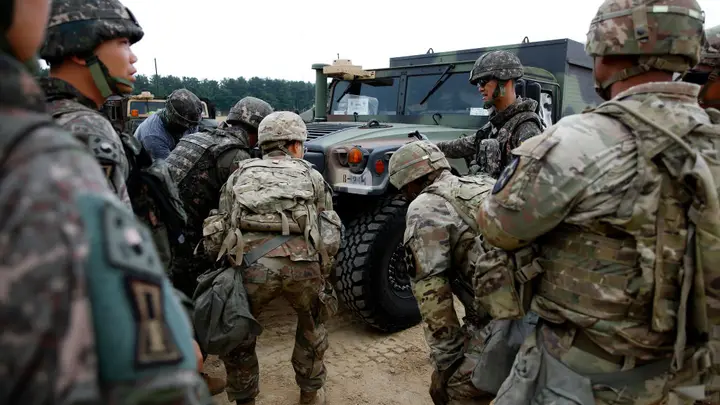
The timing of the order has drawn particular scrutiny because it follows a fresh surge in North Korean weapons testing. Pyongyang conducted two ballistic missile launches within six days this month, continuing a pattern of activity that Western intelligence agencies say reflects both technical progress and political intent.
The tests have not, so far, crossed the threshold of an intercontinental launch. But analysts note that the frequency is rising, and that each launch yields data the North Korean programme can use to refine its arsenal. The trajectory has complicated the case for a drawdown — and given critics of the president's decision a ready-made line of attack.
"You can never take your eye off Kim Jong Un," one regional security expert said in an interview, summing up the unease among Korea watchers. "The moment you assume deterrence is settled, it isn't."
Seoul's Iran calculation
Behind the public rationale lies a quieter diplomatic friction. Mr. Trump's announcement also followed South Korea's decision to decline participation in the U.S.-led effort to denuclearize Iran — a choice that administration officials privately acknowledge shaped the president's view that Seoul should bear less of the burden, and reap less of the benefit, of American military engagement on the peninsula.
The linkage is unusual. Historically, U.S. force posture in South Korea has been calibrated to the North Korean threat, not to Seoul's stance on a separate Middle East initiative. By weaving the two together, Mr. Trump has signaled that alliance management under his administration will be transactional — and that participation in one American priority may be priced against support for another.
Officials in Seoul have not publicly responded to that framing. But the silence itself has been read by observers as a sign of careful calibration in a relationship that both sides need but neither takes for granted.
Pyongyang's rhetoric
For its part, North Korea has greeted the drills — even in their reduced form — with the bellicose language that has become its standard prelude to major U.S.-South Korean exercises. On Friday, Pyongyang threatened unspecified "stern steps" against Washington and Seoul, describing the operations as "a rehearsal for an aggressive war" that would deepen instability in the region.
The warning was typical of the harsh rhetoric North Korea routinely deploys before such exercises. Experts say the regime has long used its rivals' drills as a pretext to expand its weapons testing, both to advance its military capabilities and to consolidate domestic support for Mr. Kim.
Whether the scaled-back drills will temper that pattern — or embolden it — is the question now occupying planners on both sides of the Pacific.
A familiar pattern
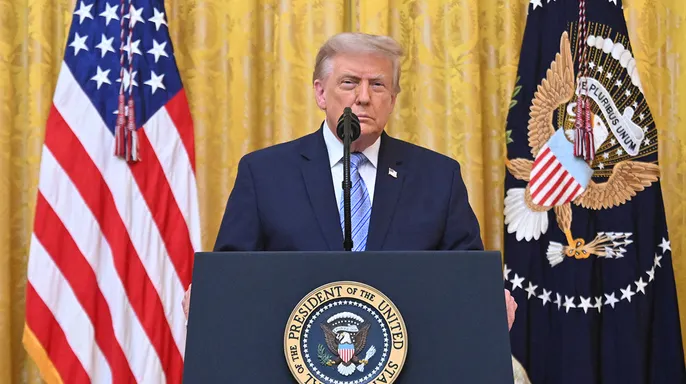
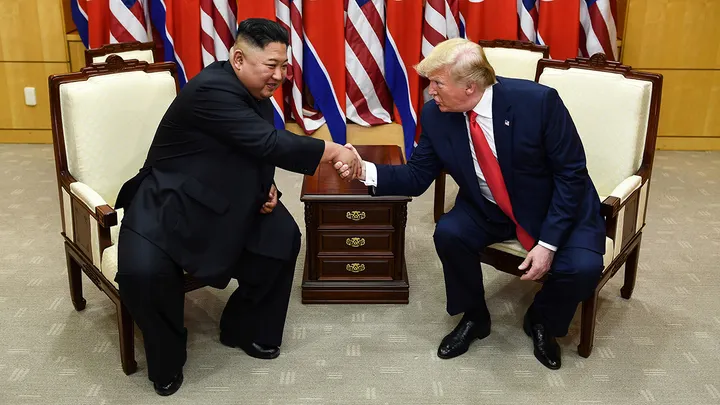
This is not the first time Mr. Trump has moved to curtail joint exercises with South Korea. During his first term, he suspended several major drills, framing the decision as a goodwill gesture to facilitate diplomacy with Mr. Kim. Those talks ultimately produced summits but no durable agreement on denuclearization, and the exercises later resumed.
The current order suggests the president has not been persuaded by the intervening years that a robust exercise schedule is essential to deterrence. It also suggests that, for Mr. Trump, the political and financial costs of the drills continue to outweigh the military benefits claimed by the Pentagon.
Inside the Defense Department, the reaction has been measured. Officials say they will implement the president's directive while preserving core readiness objectives, though several acknowledged privately that a meaningful reduction in scope will inevitably narrow what the exercises can accomplish.
The broader question
For allies across the Indo-Pacific, the order is being read as a data point in a larger pattern: an American president willing to adjust long-standing military commitments on his own judgment, and willing to do so even when the immediate threat environment is worsening rather than improving.
That reading may overstate the significance of a single decision. But it captures the unease that has settled over the region as Mr. Trump's second-term approach to alliance management takes shape — one in which the default assumption of American engagement can no longer be taken for granted, and in which the price of partnership is being quietly renegotiated.
For now, the drills will go ahead, in reduced form. The missiles, too, keep flying. And the gap between the two is the space in which the next chapter of the Korean standoff will be written.