Glacier Collapse Triggers Deadly Himalayan Flood: 469 Dead, 1,400-Plus Missing as Rescuers Fear Second Surge
A collapsed glacier unleashed a wall of water through the Nepal-Tibet border region, wiping out villages, a key border crossing, and leaving citizens from more than 30 countries among the missing as a new lake threatens to burst.
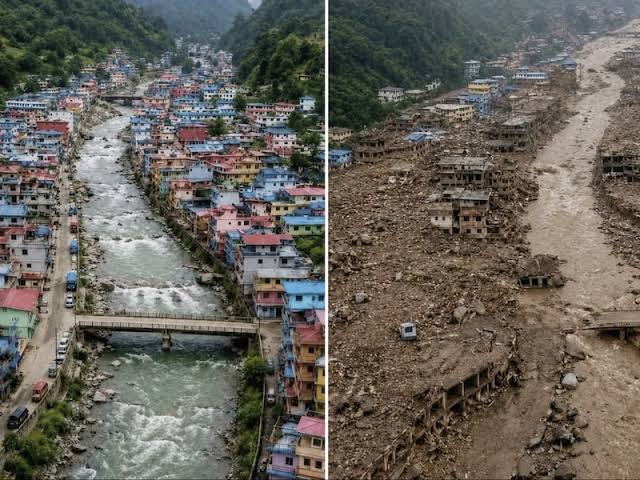
Before and after: a Himalayan town along the Nepal-Tibet border, shown thriving (left) and then devastated by flash floods and debris (right). (Supplied)
KATHMANDU, Nepal — A catastrophic flash flood unleashed by a collapsing glacier has torn through the Himalayan border region of Nepal and Tibet, killing at least 469 people and leaving more than 1,400 missing in a disaster that has stunned rescuers and left desperate families clinging to hope amid the mud and rubble.
The death toll continued to climb Friday as Nepal police confirmed the grim milestone, with the full scale of the catastrophe still coming into focus. The surge of water, triggered when a glacier gave way on the China-Nepal border, roared through villages, obliterated roads, and wiped out a key border crossing in a matter of minutes.
'On Edge': Fears of a Second Flood
Rescuers searching for survivors in the devastated region are now "on edge" over alarming reports that a second flood could strike at any moment, a Red Cross official told the BBC. A lake of rising water has formed near the China-Nepal border, prompting fears it could burst its banks and send another deadly wall of water crashing through communities already brought to their knees.
"The situation is extremely dangerous," the official said, describing the agonizing wait for thousands of families still searching for loved ones swept away by Wednesday's torrent. "We are on edge."
A Wall of Water From a Collapsed Glacier
Local officials say a collapsed glacier caused the enormous flood wave that surged through the region with terrifying speed. The torrent tore through houses and roads, destroyed a dam under construction, and swept away bridges and buildings as if they were made of paper.
Dramatic video footage from the scene shows a pedestrian river crossing shaking violently as muddy floodwaters rage beneath it, a silver car being swallowed by the torrent, and workers fleeing for their lives as the water closed in. In one clip, a massive boulder rolls down a river choked with debris.
The Nepali army has been racing to reach the hardest-hit areas, plucking survivors from rooftops by helicopter and pulling mud-caked victims from the ruins of their homes. But the scale of the destruction — and the threat of more flooding to come — has hampered the desperate rescue effort.
More Than 1,400 Missing — From 30 Countries
The numbers are staggering. In Nepal alone, more than 900 people are missing and at least 389 have died. In Tibet, three people have died and more than 550 are missing, though it is not clear whether the latest figures overlap. Citizens from more than 30 countries are among the missing, with India, Australia, and the United States all confirming that their nationals are unaccounted for.
The region is a magnet for tourists — tens of thousands visit every year — and many of the missing were travelers caught in the wrong place at the wrong time. China's Xinhua news agency reported Friday that authorities had evacuated 555 stranded tourists from Tibet, though information has trickled out slowly due to Beijing's tight media controls.
'We Just Want Them to Come Home'
Behind every number is a family waiting, hoping, praying. The BBC spoke with relatives of the missing, including two sisters whose parents vanished in the flood.
"We just love them a lot and want them to come home."
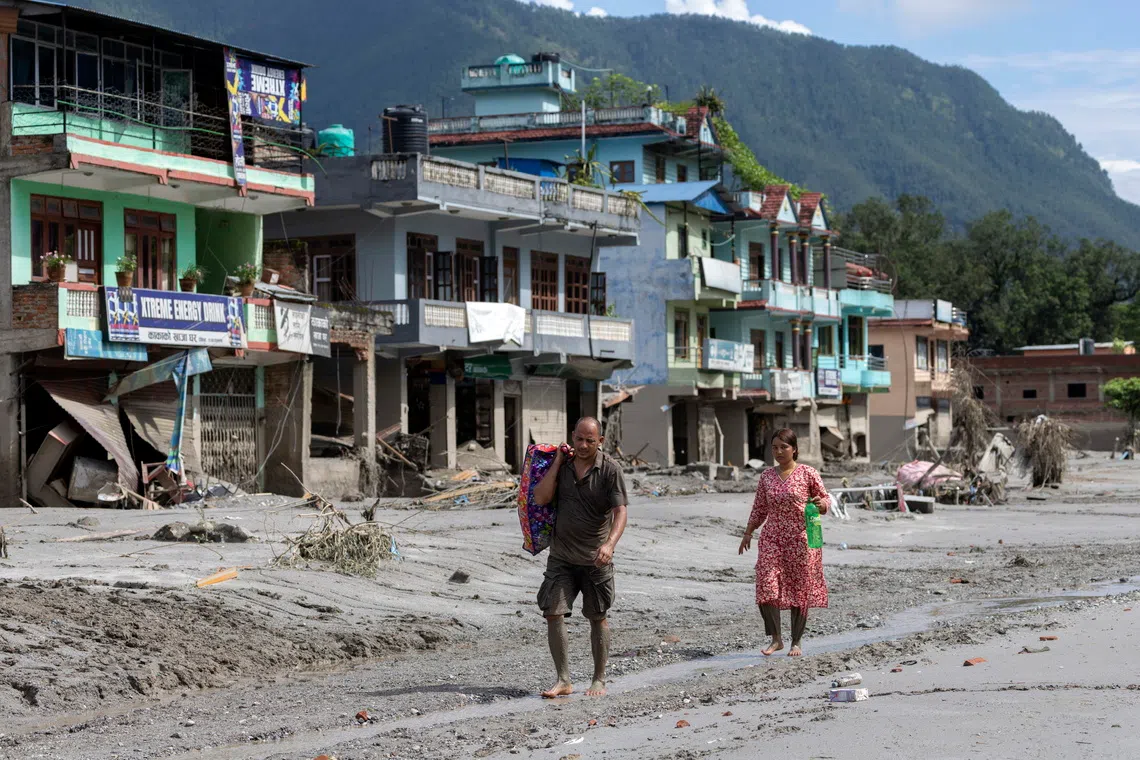
Residents pick their way through a thick layer of mud and debris left behind by the flash floods that devastated Himalayan communities along the Nepal-Tibet border. (Supplied)
At a hospital in Kathmandu, families have gathered day after day, waiting for any scrap of news — a name, a survivor, a body to identify. One man, his voice breaking, told reporters his wife, his mother, his brother, and his uncle were all missing. "My family members were swept away," a woman said, standing before a stand of trees.
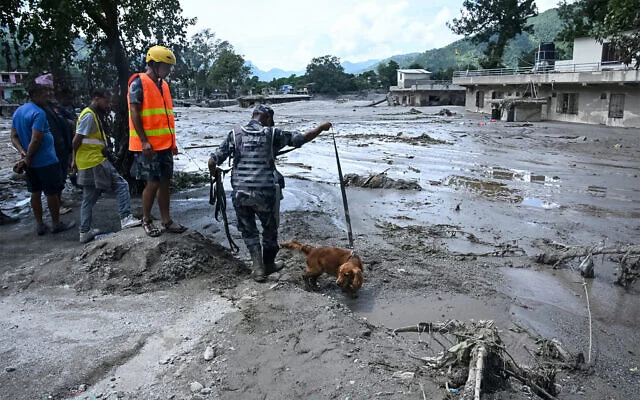
Rescue workers and officials survey the devastation, navigating deep mud and uprooted debris left by the floodwaters. (AFP)
A Race Against Time
Rescue teams are in a race to save lives before the threatened second flood — or the next downpour — makes a bad situation immeasurably worse. Helicopters have been pulling survivors from rooftops, soldiers have been carrying the injured through knee-deep mud, and volunteers have been digging through debris with their bare hands.
But with a rising lake threatening to burst its banks and more than 1,400 people still unaccounted for, the Himalayan border region is holding its breath — bracing for the possibility that the worst may not yet be over.
Founder & Editor-in-Chief · Independent News Australia
Nelly J. Yoa is the Founder and Editor-in-Chief of I News Australia and a 2025 Australian of the Year Nominee. A former professional soccer player turned journalist, his reporting spans diplomacy, world affairs, and Australian politics.
President says the U.S. 'doesn't have to' use nuclear weapons as the Defense Department reportedly weighs a massive conventional strike on Tehran's atomic sites. Meanwhile, Iran vows to keep the Strait of Hormuz shut until American forces leave the region.
Elon Musk pointed the finger at the White House after Starlink speed limits crippled Ukraine's battlefield drones during one of Russia's biggest barrages of the war, leaving Kyiv flying blind as missiles rained down.
NATO's top military commander delivered a blistering ultimatum to Moscow, vowing to 'break' Russian warfighting systems and destroy 'anything and everything' supporting an attack on allied soil as tensions on NATO's eastern flank hit a boiling point.
Nelly Yoa13 October 2026
We use cookies to operate the site and (with your consent) to improve your experience and understand usage. Cookie Policy · Privacy Policy