Australia is going to war against drug cartels in the Pacific — and Prime Minister Anthony Albanese says he's "confident" the region has already picked Canberra over Beijing as its partner of choice.
Albanese on Wednesday unveiled a blockbuster $600 million package to crush transnational drug trafficking across the Pacific Islands, warning that criminal syndicates are tearing at the social fabric of vulnerable island nations.
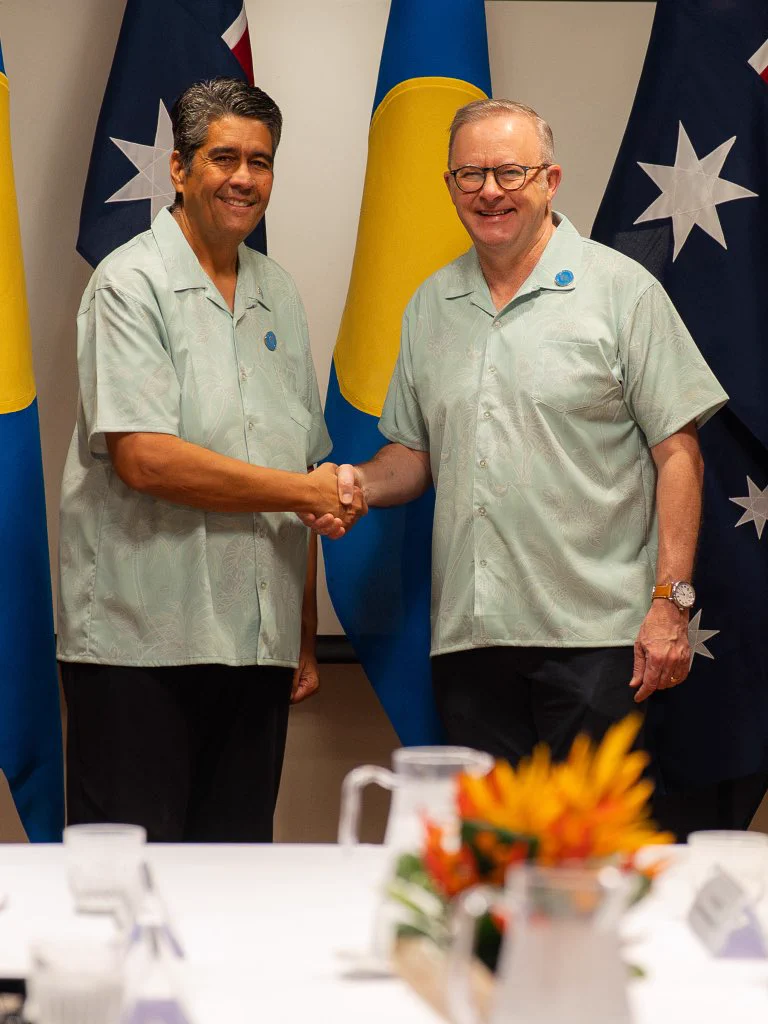
Speaking at the Pacific Island Forum in Palau, the Prime Minister declared the battle for regional influence all but won — pointing to two mutual defence pacts and a string of security and economic deals locked in since Labor took office in 2022.
"Many Pacific nations spoke during that session about grappling with illicit drug trafficking, because it's really having an impact as well on social cohesion in those communities," Albanese told reporters.
Cartels in the crosshairs
The staggering cash splash — dubbed the Waqa Moana initiative — will bankroll aerial surveillance to hunt suspected drug-running vessels ferrying narcotics across the Pacific, train up regional police forces, and supercharge Australian Federal Police operations against the Central and South American cartels churning out the product.
The scale of the problem is jaw-dropping: Australian and international law enforcement have already seized more than 17 tonnes of drugs in the region this year alone — nearly four times the haul from 2025.
Trafficking through the Pacific has exploded in recent years, fuelled by insatiable demand for cocaine in Australia and New Zealand.
"Pacific leaders have asked for Australia to do more and we will do more," Albanese said flatly.
China's influence slipping
While Canberra surges, Beijing is sliding. China's nuclear-capable missile test in July sparked widespread condemnation across the region, and its heavy-handed diplomatic posturing at this week's forum has only alienated Pacific leaders further.
China's Pacific envoy, Qian Bo, triggered a diplomatic firestorm when he threatened "consequences" after Taiwan was welcomed at the PIF — drawing a sharp rebuke from Albanese.
"The Pacific Island Forum determines what happens here, not any other country."
Albanese's blunt pushback signalled that Australia is no longer willing to tiptoe around Beijing's sensitivities in its own backyard.
'Biggest security threat after climate change'
Pacific Affairs Minister Pat Conroy, standing alongside the Prime Minister, delivered a stark warning about the scale of the criminal threat facing the region.
"Transnational crime is the biggest security threat to the Pacific after climate change."
"We know that crime is becoming multinational in nature and that means a solution must be multinational as well," Conroy said. "This is an example of a Pacific-led approach supported by Australian action to tackle the scourge of drug trafficking that is a challenge not just for Pacific Island nations but for Australia as well."
He stressed the Waqa Moana initiative would be strictly "opt-in" — a nod to the sovereignty sensitivities that have long defined Australia's dealings with its smaller neighbours.
"That is important — sovereignty above all else," Conroy said. "This is another example of Australia turning up, listening and acting on the priorities of the Pacific in a way that is respectful to sovereignty, that tackles collective issues collectively."
Taiwan flashpoint
The Taiwan question has emerged as a fresh flashpoint at this year's forum, with Beijing fuming over Taipei's participation.
But Conroy dismissed China's objections, noting that PIF members agreed more than three decades ago on the framework for both Taiwan and China's attendance.
"Taiwan can attend the PIF as a development partner while the People's Republic of China attends as a dialogue partner," he told ABC's Radio National. "And that's the consensus that's existed in the PIF since 1992. It was confirmed last year and it's what Australia supports."
The message from Palau was unmistakable: Australia is back as the Pacific's security partner of choice — and it's putting its money where its mouth is.