A young scientist at a Russian anti-plague lab is dead after reportedly smashing a test tube of live Black Death bacteria, sparking a frantic quarantine of nearly 200 people and a Kremlin cover-up row that reaches all the way to Vladimir Putin.
Daria Shipilova, a 28-year-old researcher at the Irkutsk Anti-Plague Research Institute in the Siberian city of Shelekhov, died in the early hours of October 2 after a nightmare fortnight that began with a single broken glass tube.
On September 25, local reports say, Shipilova accidentally shattered a vial containing live Yersinia pestis, the bacterium that causes plague and wiped out tens of millions of Europeans during the Black Death.
Days later, she was in hospital with severe pneumonia, gasping on a ventilator. Then she was gone.
And now Russia can't, or won't, say whether the disease that killed her is the one the institute was built to fight.
'Pneumonia of unknown aetiology'
Russia's consumer health watchdog, Rospotrebnadzor, has insisted the 28-year-old died of pneumonia of unknown aetiology, a clinical shrug of the shoulders that has done nothing to calm a terrified Siberian public.
Officials say the sanitary and epidemiological situation in Irkutsk, Shelekhov and the surrounding region remains stable. The residents of Shelekhov are not so sure.
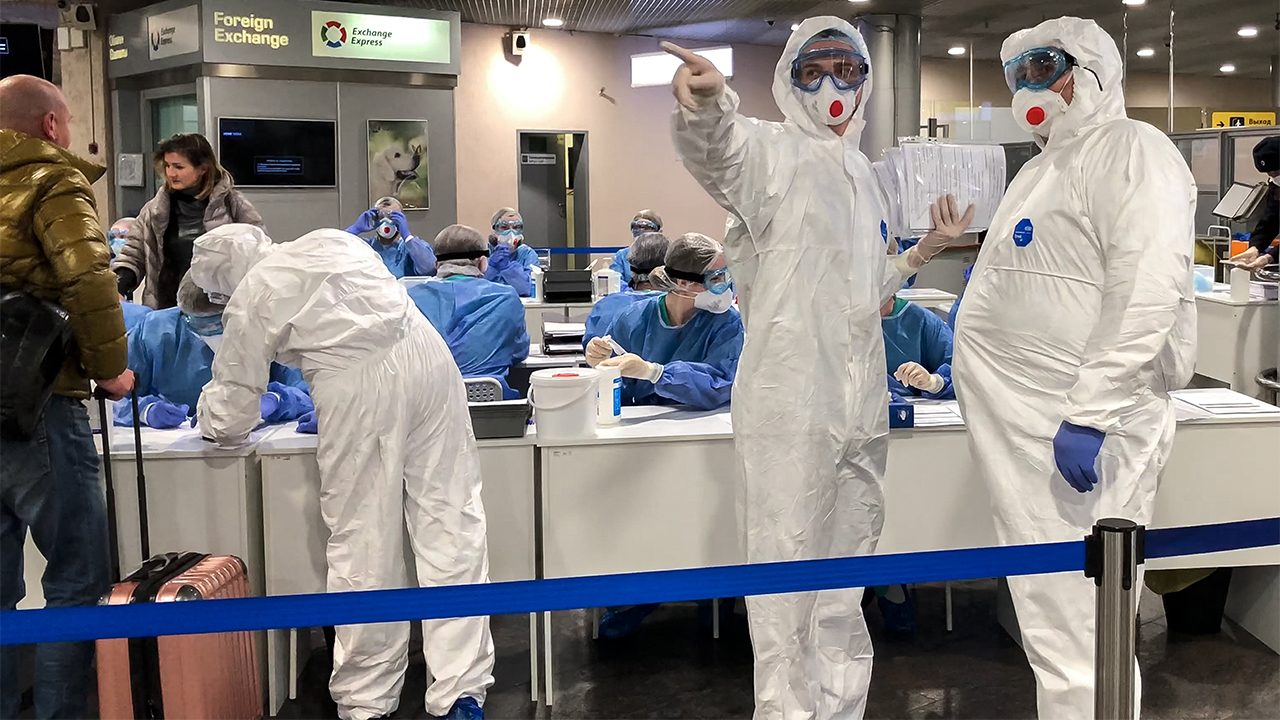
Independent outlet Lyudi Baikala reports that 197 people who may have come into contact with Shipilova have been identified, with about 189 placed in hospitals or under medical observation. Several hospitals are reportedly under quarantine. A nearby aluminium plant slapped a mask mandate on its workers. Residents have spotted figures in full protective suits, masks and gloves moving through the streets. Masks have reportedly been handed out in schools.
This is not the picture of a stable situation.
The disappearing warnings
The Kremlin's problem is that the internet remembers what the officials delete.
The town of Baikalsk reportedly issued an advisory telling residents to avoid travelling to Shelekhov and nearby areas because of a plague-related death. Hours later, the warning vanished.
Kremlin-linked broadcaster REN TV reportedly deleted posts about the number of people placed under observation.
The head of neighbouring Buryatia, Alexei Tsydenov, initially said the woman had possibly died from plague, before switching to more cautious language and insisting there are no plague outbreaks in his region.
A former head of Rospotrebnadzor, Gennady Onishchenko, brushed off the prospect of an outbreak altogether, declaring the infection was most likely not the plague.
Most likely. Not exactly a ringing endorsement of calm.
There is no evidence that Putin personally directed any concealment. But the pattern of public reassurance followed by quiet deletion has fuelled accusations that the Kremlin is sitting on the scale of a potential pneumonic plague outbreak, the deadliest form of a disease that once emptied entire cities.
The boss flies in
Russia's chief sanitary official, Anna Popova, has reportedly travelled to Irkutsk to personally oversee the response, the kind of move that happens when the suits in Moscow are worried.
Irkutsk Governor Igor Kobzev convened an emergency meeting with Russia's chief sanitary doctor after a suspected case of a particularly dangerous infection was identified. He said close contacts were under medical supervision and had so far shown no signs of the disease.
Public events in the region have reportedly been cancelled as officials scramble to bottle up public concern before it spills over.
What is pneumonic plague?
Plague is caused by the bacterium Yersinia pestis and is the disease that devastated Europe during the Middle Ages, killing an estimated 50 million people in the 14th century alone.
There are three main forms. Bubonic plague is the one most people know, spread by infected fleas and marked by the swollen, painful buboes that gave it its name. Septicaemic plague hits the blood. Pneumonic plague, the form feared in Shelekhov, attacks the lungs and can spread directly from person to person through respiratory droplets, a cough, a breath, a shared room.
Symptoms include fever, headache, weakness, shortness of breath, chest pain and a cough. The World Health Organisation says plague can be treated successfully with antibiotics when caught early. The catch with pneumonic plague is that it can progress rapidly without treatment, turning a treatable infection into a death sentence in a matter of hours.
It is, in short, exactly the disease you do not want a 28-year-old researcher handling with a broken test tube and a government that won't say what she was carrying.
What really happened in that lab?
The official story keeps shifting.
Rospotrebnadzor says no accidents involving pathogenic microorganisms were recorded at the institute and that no other staff member sought medical treatment for an infectious disease in the preceding 10 days. The agency says further testing of samples taken from Shipilova did not identify microorganisms connected to her professional work.
Local reports tell a different story. One account says she was working with live biological material at the anti-plague institute when a test tube was accidentally broken on September 25. Another suggests she may have been exposed during a work trip to Buryatia, a vast region bordering Lake Baikal.
Both cannot be true. Neither has been confirmed. And the woman who could settle the matter is dead.
For now, Siberia is left watching the hazmat suits walk its streets and wondering whether the next cough is just a cold, or something that killed half a continent the last time it got loose.
The Kremlin says everything is under control. The disappearing warnings say otherwise.