Thirty-three souls gone in a flash of fire and twisted metal.
A Russian glide bomb tore through two civilian buses in the frontline city of Kramatorsk on Thursday, turning a routine ride into a slaughterhouse and marking one of the deadliest single strikes on Ukrainian civilians in months.
Eighteen more were wounded, their bodies scattered across the road alongside the burning wreckage. Donetsk regional head Vadym Filashkin didn't mince words: Russia, he said, had deliberately targeted a bus packed with passengers to kill as many civilians as possible.
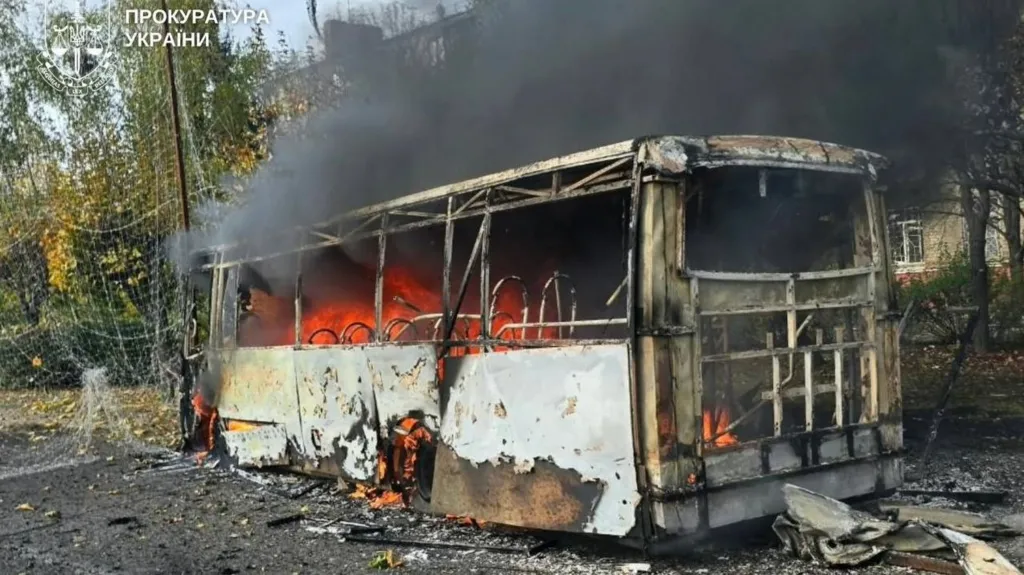
Images posted by local prosecutors showed the blackened shell of the bus engulfed in flames, smoke billowing into the grey sky, debris strewn across the asphalt.
'We have no right to risk lives'
The attack was no one-off. It was the crescendo of a bloody week.
Just a day earlier, a Russian missile obliterated a five-storey apartment block in Pryluky, east of Kyiv, killing 22 people as they slept. Five of the dead were children. Three of them were just one year old.
The UN says more civilians have been killed in Ukraine by August of this year than in all of 2025 combined.
In Kramatorsk and neighbouring Slovyansk, the so-called "fortress belt" Russia is fighting to seize, the situation has grown so dire that Filashkin ordered all public transport to a halt.
"We have no right to risk the lives of passengers and drivers," he said, pleading with anyone still in the Donetsk region to get out while they still can.
Putin's killing machine grinds on
Kramatorsk, once a quiet logistics hub for the Ukrainian military, now eats glide bombs nearly every day. In late August, nine were fired at the city in a single 24-hour span.
The bombs, fitted with winglets that let them glide toward their targets rather than simply fall, have become Vladimir Putin's weapon of choice for terrorising the civilians he claims to be "liberating."
The Kramatorsk City Council called the strike "a horrific crime committed by the Russian army against the civilian population."
"Once again, the Russians have struck a location where there are absolutely no military targets."
Kyiv under siege
The carnage isn't confined to the east. In Kyiv, air raid sirens wail through the day as Russia hammers the capital with relentless drone and missile barrages.
Mayor Vitali Klitschko said Thursday's attacks killed three more in Kyiv and wounded 14, two critically. Schoolchildren are being pulled from classrooms into shelters. Businesses are shuttering. Power is flickering out.
Local water authorities warned that pressure was dropping across the city's right bank as Russian strikes on the energy grid bit deeper into civilian life.
'Concrete action'
President Volodymyr Zelensky, posting condolences to Telegram, demanded Ukraine's partners deliver "concrete action through new defence packages for the protection of Ukraine."
But the harsh truth is this: interceptor missiles are in short supply the world over, and Ukraine has little means to stop the Russian ballistics raining down on its cities.
Both sides have intensified long-range strikes in recent months, with Russia targeting Ukrainian data centres, logistics warehouses and the energy grid that keeps millions warm through a bitter winter.
For the families of the 33 dead in Kramatorsk, the geopolitics meant nothing. A bus ride home became a death sentence, delivered by a bomb that fell from the sky without warning.