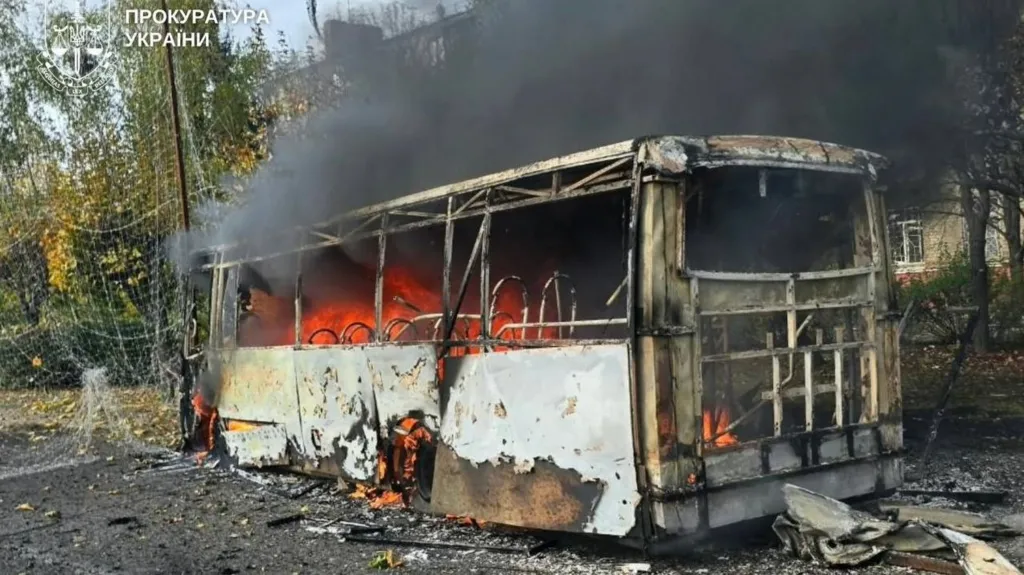
America's war with Iran is boiling over — and the fallout is lapping at Jordan's borders.
U.S. Central Command pounded Iranian coastal military targets and Islamic Revolutionary Guard Corps assets for an eighth consecutive night Saturday, even as a diplomatic furor erupted in Amman over a stunning security alert that ordered Americans away from a key Jordanian port city.
The U.S. Embassy in Amman issued a blunt warning Sunday: get clear of Aqaba's international airport and seaport, now, citing a "specific and credible threat."
'No potential threats': Jordan hits back
Within hours, Jordanian officials were pushing back — hard.
"No potential threats have been recorded by the relevant Jordanian authorities in the past few hours," government spokesperson Mohammad Al-Momani told Reuters in a written statement. "The airport and port are operating normally."
The rare public contradiction laid bare the strain on a kingdom that has stood as a quiet American partner through eight straight nights of U.S. bombardment across the Strait of Hormuz and beyond.
Jordan was the target of Iranian IRGC strikes that killed two American soldiers and left one more missing earlier this week.
The embassy's evacuation call — and Jordan's swift denial — came days after Iran's Revolutionary Guards rained strikes on a U.S. air base on Jordanian soil, killing two American soldiers and leaving a third missing. The attack on the Azraq base marked the first confirmed U.S. combat deaths of the widening conflict.
Eighth night of strikes
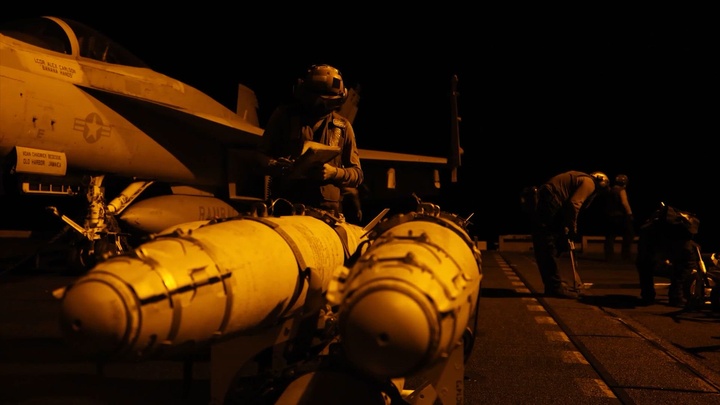
As the diplomatic row played out, CENTCOM confirmed it had finished its eighth straight night of strikes against Iran, hammering air-defense systems, coastal radar sites, missile and drone capabilities and small boats in a relentless campaign to grind down Tehran's ability to project force.
The campaign began in late June after Iran attacked a commercial vessel, and has escalated sharply since a wave of Iranian retaliation targeted American bases across Kuwait, Bahrain and Jordan on July 14.
Kuwait infrastructure hit again
The violence is no longer confined to military targets.
A power generation and water desalination plant in Kuwait was struck for the second time in two days Sunday, the country's electricity ministry said. The latest hit sparked a fire at the facility and forced authorities to disconnect several generating units as a precaution.
Kuwait's military said its air defenses were engaging hostile drones, and that explosions heard by residents were the sound of interceptions. Authorities blamed Iran for the attacks, which have targeted both military sites and critical civilian infrastructure as the regional war spreads.
Darkhovin in the crosshairs
Iran, meanwhile, claimed U.S. strikes had targeted the Darkhovin nuclear facility — a flashpoint in a conflict that has drawn in Tehran's atomic program and raised fears of a broader conflagration across the Middle East.
From the Arabian Sea to the Gulf of Aqaba, the map of the war keeps growing. Eight nights of American firepower. Two dead U.S. soldiers. A missing service member. Burning infrastructure in Kuwait. And a confused, contradictory security alert over a Jordanian port.
For now, the only certainty is this: the bombs have not stopped.
I News Australia Staff Writer | Reuters contributed to this report.