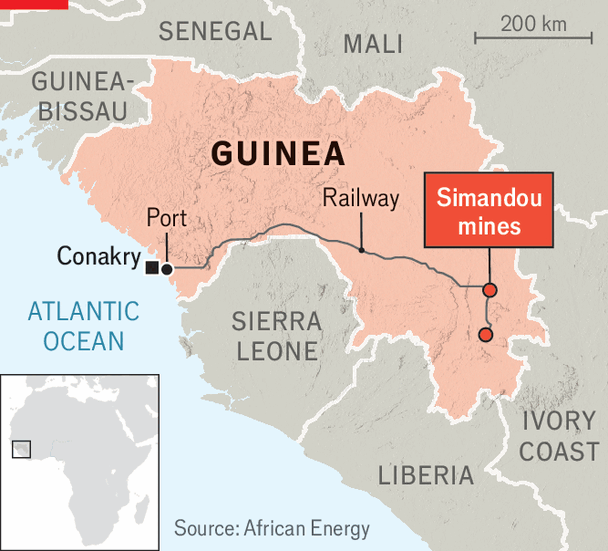
Beyond Simandou, Guinea is attempting something far bigger: turning extraordinary natural wealth into roads, power, universities, industries, jobs and opportunity for an entire generation.
CONAKRY — There are moments in the history of nations when a country decides its natural wealth should mean more than what lies beneath the ground.
For Guinea, that moment is unfolding right now.
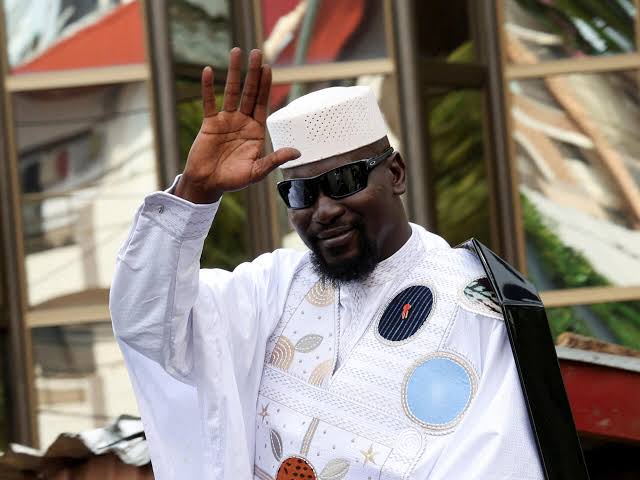
At the centre of this transformation is His Excellency General Mamadi Doumbouya, President of the Republic and Head of State, whose government has placed economic transformation, infrastructure, human capital and national development at the centre of its long-term agenda.
The ambition is enormous.
It is called Simandou 2040.
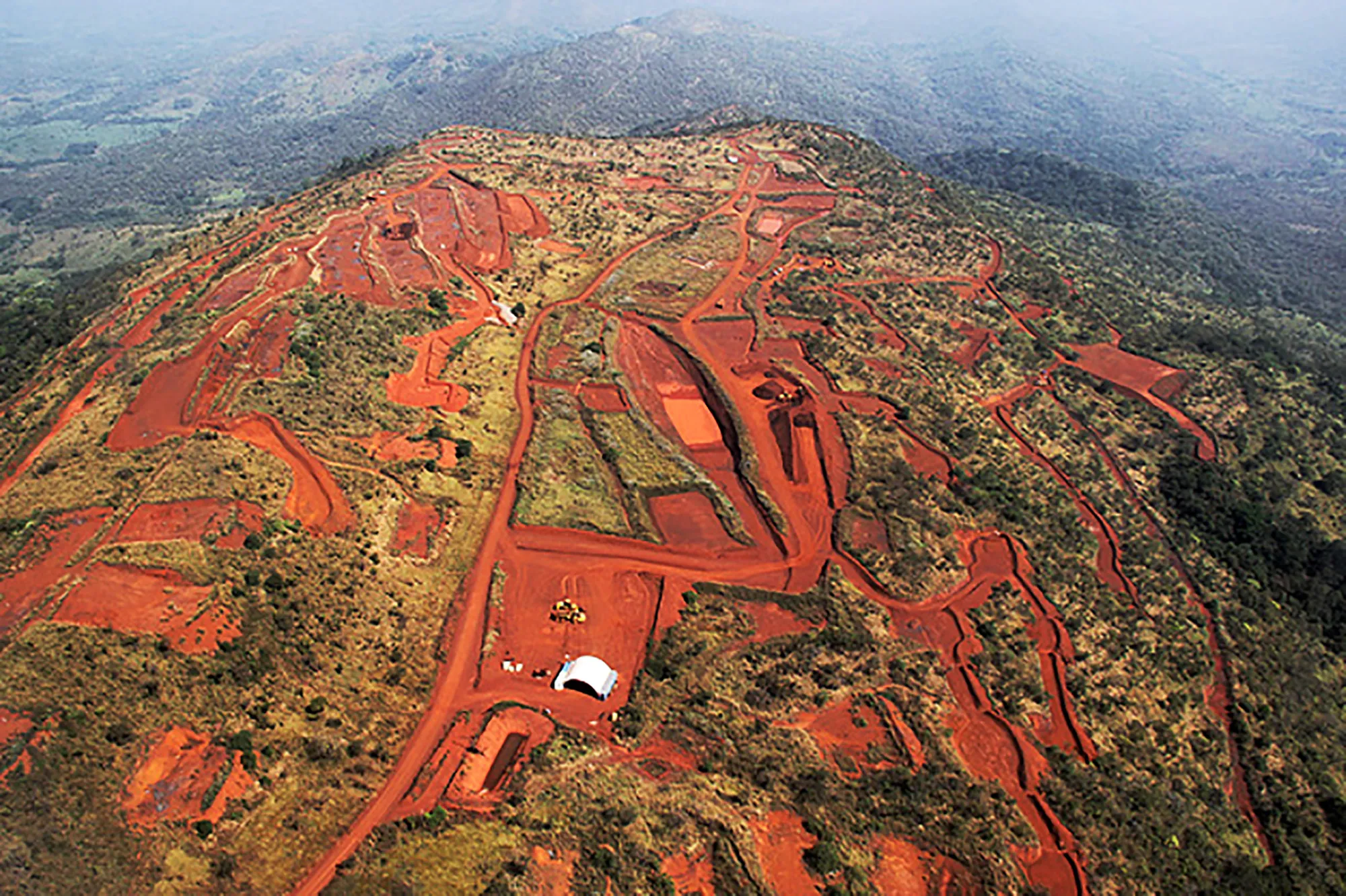
But to understand the vision of President Doumbouya, look beyond the iron ore. Because Simandou, in this vision, is not simply a mine.
It is a starting point. A port. A railway network. Power generation. Roads. Agriculture. Factories. Universities. Technical institutes. Scholarships. Local businesses. Industrial processing. And a new generation of Guineans equipped with the skills to participate in the country's economic transformation.
The official Simandou 2040 programme describes itself as Guinea's 15-year emergence plan — bringing together more than 122 major projects, 36 reforms, 14 priority sectors and an announced investment ambition of US$200 billion through 2040.
President Doumbouya's own message makes the philosophy explicit: the programme is intended to place human capital at the heart of Guinea's development, strengthen local skills, reduce inequalities, create opportunities for local businesses and prepare the country for future generations.
That is the bigger story.
THE MAN BEHIND THE VISION
President Doumbouya's development agenda is built around an idea of national self-reliance.
The official programme describes Simandou 2040 as a vehicle for economic emergence and diversification, while its stated objective is to use Guinea's natural and agricultural wealth as a foundation for broader development.
The President has said the programme should not depend on one individual, one president or one minister, but should become an institutionalised national development framework.
That distinction matters. The stated ambition is not simply to deliver a collection of construction projects. It is to build systems that can continue generating economic opportunity beyond individual political terms.
The programme's five pillars — agriculture, food industry and trade; education and culture; infrastructure, transport and technology; economy, finance and insurance; and health and wellbeing — illustrate how broad that ambition has become.
This is a national-development blueprint rather than a mining programme.
THE PORT THAT CONNECTS GUINEA TO THE WORLD
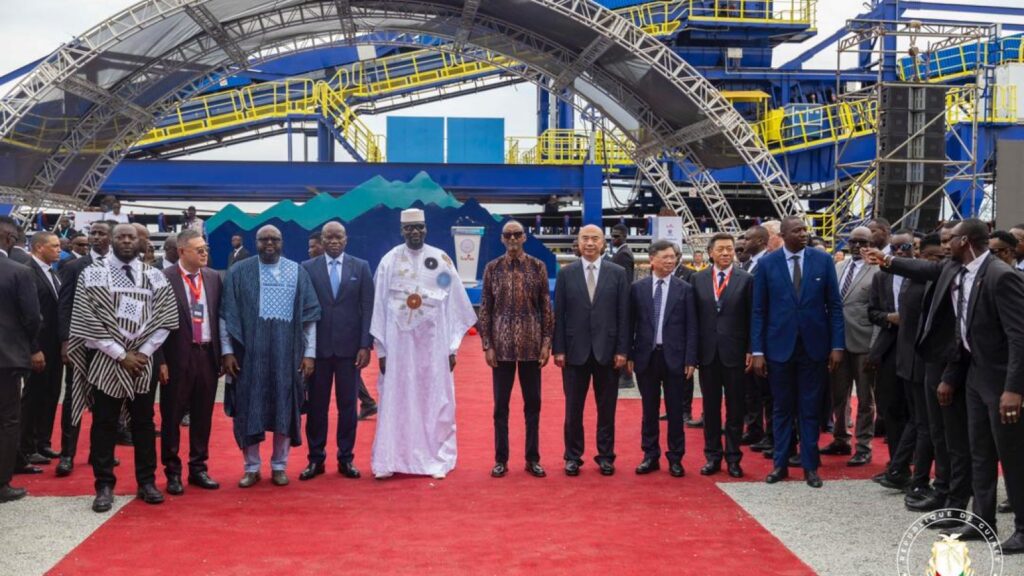
At Morébaya, that vision is already taking physical form.
The Integrated Simandou Megaproject at Morébaya Port is described by the official programme as a strategic hub for both mining and agricultural exports. Its reported progress is 100 per cent, with the project inaugurated and fully operational.
That achievement represents something larger than a port. For Guinea, logistics are fundamental to economic transformation. A country can produce agricultural goods, minerals and manufactured products, but without roads, railways, ports and efficient transport systems, those products struggle to reach markets competitively.
Morébaya is therefore part of the connective tissue of the new Guinea. And importantly, its role is not limited to minerals — the official description specifically identifies agricultural exports alongside mining.
That is precisely where the broader Simandou vision begins to emerge.
BOFFA: FROM BAUXITE TO INDUSTRIAL VALUE
In Boffa, another chapter is being written.
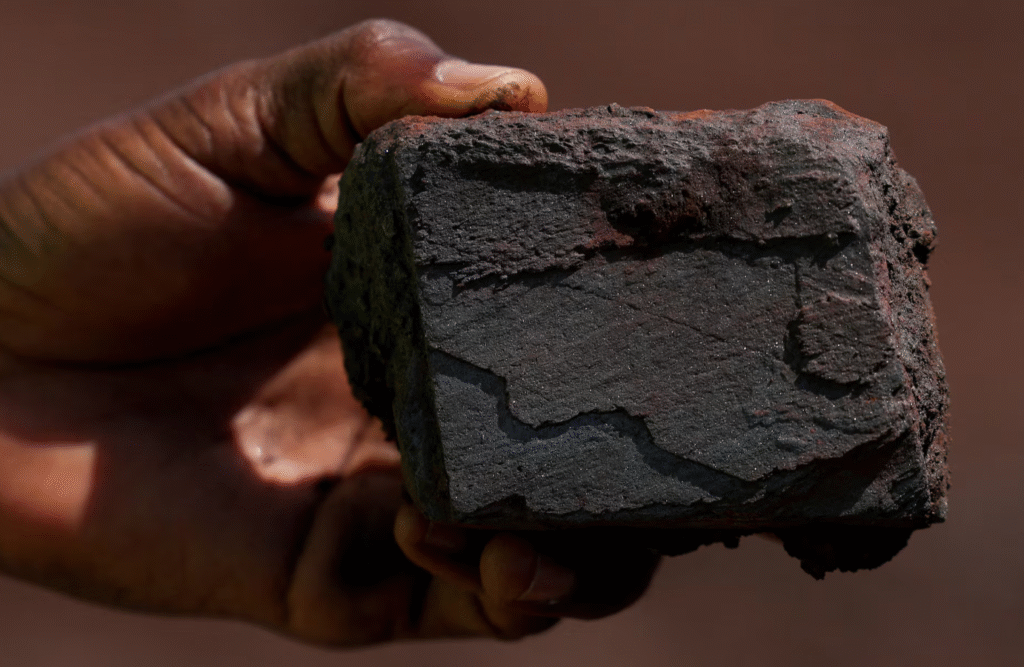
In June 2026, construction works were formally launched for the Chalco alumina refinery. The project is designed around an announced investment of approximately US$1 billion, with planned annual alumina production of approximately 1.2 million tonnes. The government describes the refinery as part of its drive to accelerate local processing of Guinea's mineral resources.
But the story does not end at the refinery gates. The project is also linked to the development of Guinean human capital, including more than 500 scholarships and plans for technical and engineering training.
That combination — industrial investment plus education — is central to the philosophy behind Simandou 2040. The objective is to ensure that Guinea's young people are not merely spectators to industrialisation. They are intended to become its engineers, technicians, entrepreneurs, managers and skilled workers.
POWERING THE NEW GUINEA
Industrialisation requires something every modern economy depends upon: energy.
Guinea's development plans therefore place major emphasis on increasing generation capacity. Among the projects under construction is the 300 MW Amaria hydroelectric power plant, while the 16 MW Siguiri thermal power plant has been reported at approximately 75 per cent completion under the official programme.
These projects sit within a much broader energy strategy designed to support economic activity and improve the foundations for industrial growth.
The logic is straightforward. More reliable electricity can support factories. Factories can create jobs. Jobs can increase household incomes. Businesses can expand. And stronger productive capacity can help Guinea move from exporting resources toward producing more value domestically.
That is the economic chain President Doumbouya's development strategy is attempting to establish.
A NEW GATEWAY TO CONAKRY
At the heart of Guinea's international connectivity is Ahmed Sékou Touré International Airport.
The first phase of its expansion is reported by the official Simandou 2040 programme at 95 per cent completion, with commissioning described as imminent.
The longer-term ambition is substantial. Simandou 2040 targets capacity for approximately three million passengers annually from 2030, compared with roughly 742,000 in 2023.
An expanded international airport can become more than a transport facility. It can help connect Guinea with investors, tourists, businesses, diplomats, students and international partners. It can also reinforce Conakry's position as a regional gateway.
ROADS THAT OPEN THE COUNTRY
Transformation cannot happen only around Conakry or the major mining corridors. It must reach communities across the country.
That is why road infrastructure occupies such an important place in the programme. The Labé–Tougué–Bafing road project, backed by approximately €300 million in financing and covering around 160 kilometres, is intended to open up a major northern corridor.
The importance of roads is measured not simply in kilometres of asphalt. It is measured in what becomes possible when communities are connected. Farmers can reach markets. Goods can move more efficiently. Students can travel. Businesses can access customers. Patients can reach hospitals. And regions that once felt distant from national economic activity can become part of a more integrated economy.
THE UNIVERSITY IS AS IMPORTANT AS THE MINE
Perhaps the most consequential part of President Doumbouya's vision is not what Guinea extracts from its soil. It is what Guinea puts into the minds of its young people.
The Simandou Academy initiative is designed to strengthen higher education, research, innovation and alignment between education and labour-market needs. In Kankan, university infrastructure is being rehabilitated and expanded, including lecture halls, classrooms, laboratories, libraries and accommodation. A modern university campus is also planned on a 225-hectare site.
This is the human-capital dimension of the transformation. A refinery can process alumina. A power station can generate electricity. A port can move exports. But it is people who operate the refinery, design the power station, manage the port, build the roads and create the companies that ultimately transform an economy.
That is why education may prove to be one of the most important investments of all.
THE INDUSTRIAL GUINEA OF 2040
The government's ambition goes considerably further than today's projects.
By 2040, Simandou 2040 sets an ambition for 17 mineral-processing plants and more than 35,000 jobs in processing industries, alongside an additional GDP contribution from mineral processing of more than US$10 billion.
That is a fundamentally different economic model from simply exporting raw materials. It is an attempt to move up the value chain. Mine the resource. Process it. Build industrial capacity. Train Guineans. Develop local companies. Create employment. And retain more economic value inside Guinea.
If achieved, the implications would extend well beyond the mining sector.
AGRICULTURE: THE OTHER ENGINE
There is another part of Guinea's transformation that deserves equal attention: agriculture.
The official Simandou 2040 programme describes agriculture as an engine of industrialisation and a lever for reducing rural poverty. Its objectives include modernising agriculture, strengthening local processing and improving food security.
The government's agriculture programme has explicitly framed food sovereignty as a component of economic sovereignty. That means using infrastructure, logistics, investment and industrial capacity to help Guinean farmers produce more, process more locally and connect more effectively with domestic and international markets.
The vision is therefore not simply: Mine → Export. It is: Produce → Process → Transport → Export → Reinvest. That distinction sits at the heart of Simandou 2040.
A $200 BILLION BET ON GUINEA'S FUTURE
The scale of the programme is extraordinary. The official roadmap divides the 2025–2040 transformation into three broad waves:
2025–2030 — FOUNDATION: An announced US$65 billion investment phase focused on building the foundations, including US$20 billion associated with the integrated Simandou mega-project.
2030–2035 — DIVERSIFICATION: An announced US$75 billion phase focused on expanding local processing industries and economic diversification.
2035–2040 — CONSOLIDATION: An announced US$60 billion phase focused on consolidation, regional integration and the emergence of Guinean companies with international reach.
Together, the programme puts forward an ambition of approximately US$200 billion over 15 years. The numbers are immense. So are the expectations.
THE REAL MEASURE OF SUCCESS
Every national development vision eventually faces the same question: What does it mean for ordinary people?
For President Doumbouya's vision to achieve its full potential, the ultimate measure will not simply be tonnes of iron ore exported, kilometres of road constructed or billions of dollars announced. It will be whether Guineans see meaningful improvements in their daily lives.
Whether young people find new opportunities. Whether Guinean businesses grow. Whether farmers gain access to better markets. Whether electricity reaches more homes and industries. Whether universities produce the engineers, doctors, scientists and entrepreneurs Guinea needs. Whether local processing creates quality employment. Whether infrastructure connects communities that have historically been left behind. And whether the wealth generated by Guinea's extraordinary resources contributes to lasting national prosperity.
Those are the questions that will define the next chapter.
BEYOND SIMANDOU
It is easy to tell the story of Guinea through the lens of one extraordinary mineral deposit. But that would miss the bigger picture.
The more consequential story may be what Guinea is attempting to construct around Simandou: a modern logistics network, a stronger energy system, industrial processing, agricultural modernisation, new roads, a modern airport, expanded universities, technical education, scholarships, local businesses, digital infrastructure, healthcare, financial inclusion — and a generation of Guineans prepared to participate in a changing economy.
That is the architecture of the Guinea envisioned in Simandou 2040. And that is the development agenda President Mamadi Doumbouya has placed before his country.
THE VISION IS BIGGER THAN A MINE.
It is about building an economy around the resource — and building a future around the people.
For Guinea, the road to 2040 has only begun. But across the country, the foundations are being laid.
And if the projects already underway, the investments being mobilised and the ambitions set for 2040 are successfully translated into durable outcomes, Simandou could ultimately be remembered not simply as one of the world's great mineral projects. It could be remembered as the catalyst for a much broader transformation of Guinea.
A transformation measured not only in ore, ports and factories — but in opportunity, education, connectivity, enterprise and the aspirations of an entire generation.