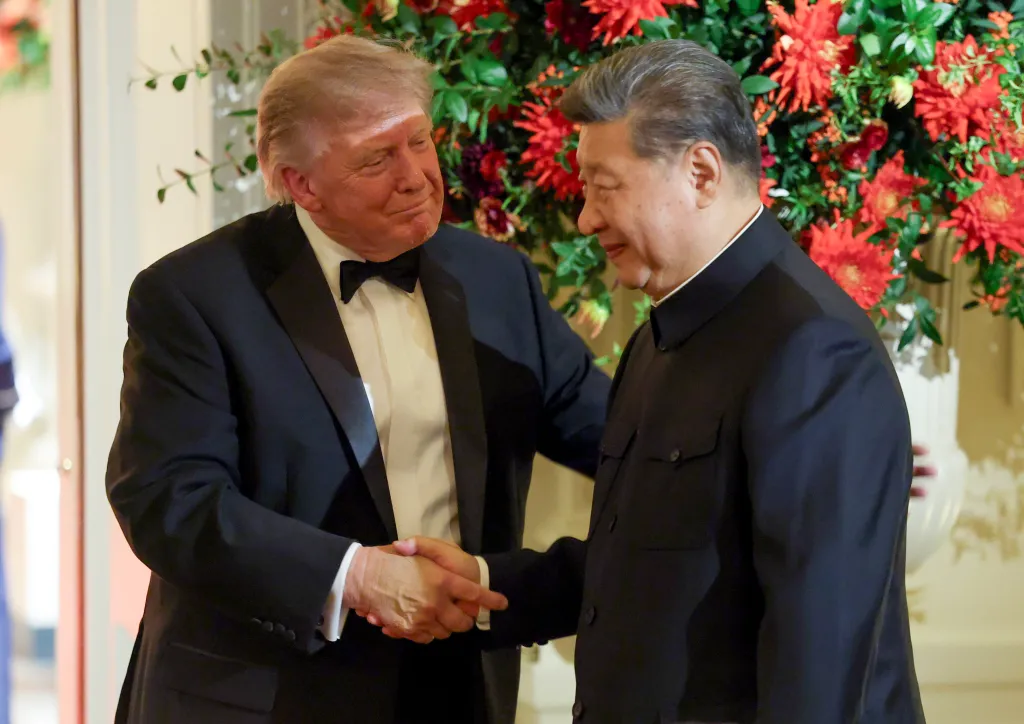
President Donald Trump welcomed Chinese President Xi Jinping to the White House on Thursday with a full red-carpet rollout, hosting a bilateral meeting and a lavish state dinner in what marked the Chinese leader's first state visit to the United States since 2015.
The pageantry was deliberate and the symbolism unmistakable. Xi and his wife, Peng Liyuan, arrived back at the Executive Mansion just after 7 p.m. after spending most of the day there with the Trumps. The president and first lady Melania Trump greeted the pair on the North Portico — Trump in a black tuxedo, Melania in chic black trousers and a white top with a large bow. Peng Liyuan wore a dress in traditional Chinese red; Xi wore all black.
It was the choreography of a presidency intent on projecting strength and personal rapport. Mr. Trump played charmer-in-chief, gushing about his mutual respect with Xi, showing off his renovations to the mansion, and even escorting the autocrat inside his presidential helicopter, parked on a new granite helipad on the South Lawn.
A guest list of billionaires
What exactly the two leaders — who agreed to a trade truce Wednesday — discussed privately remains unclear. Xi, characteristically, chose not to answer questions, including those from The Post, as he strolled the executive grounds with Mr. Trump.
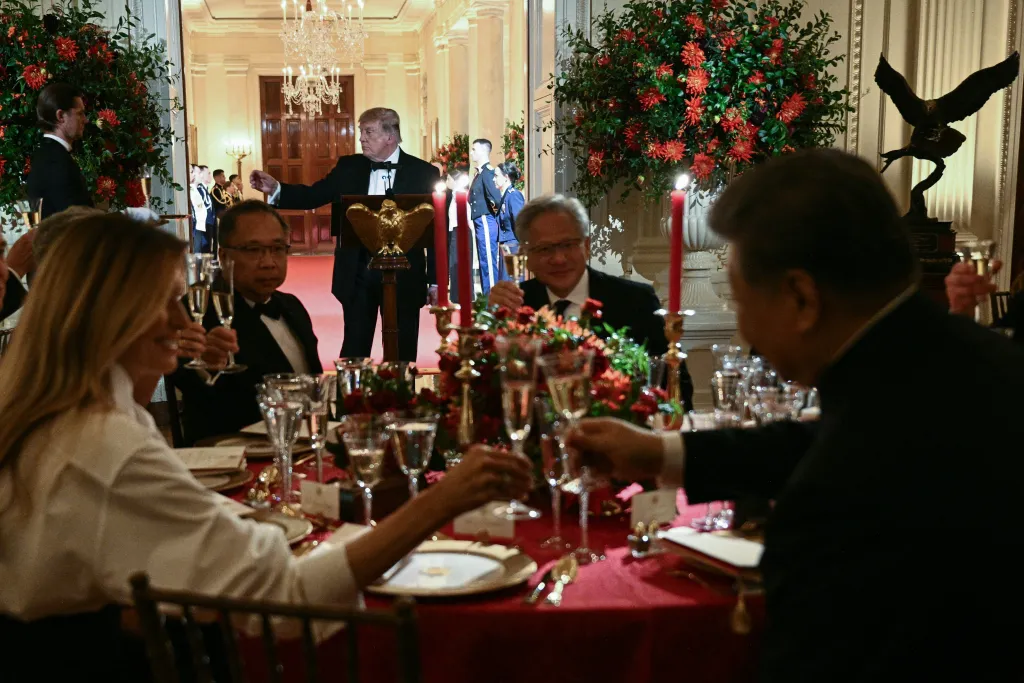
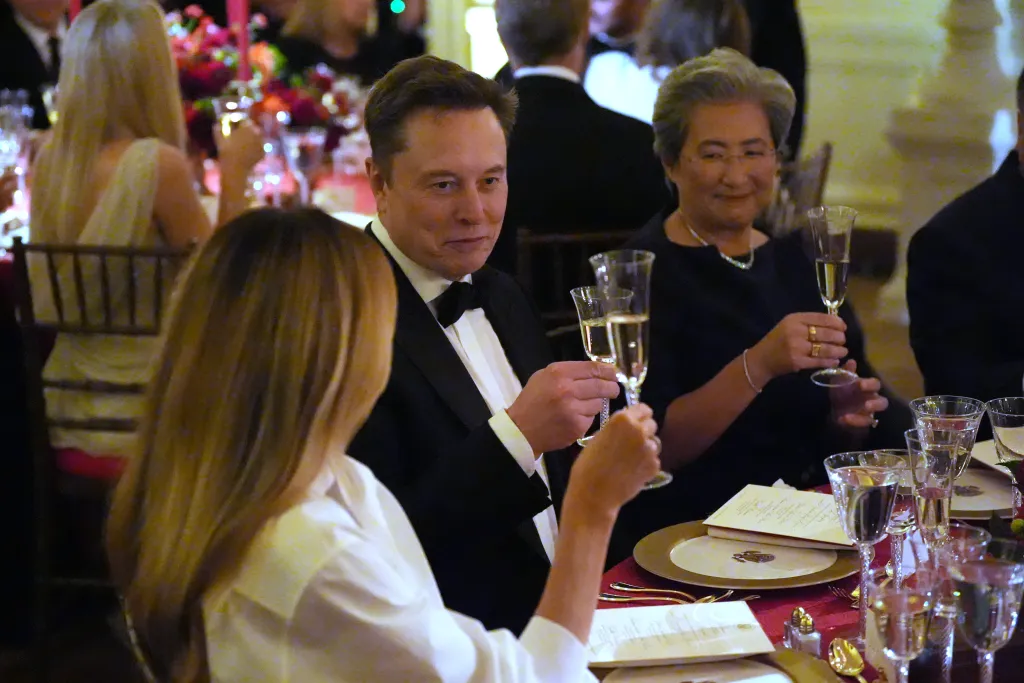
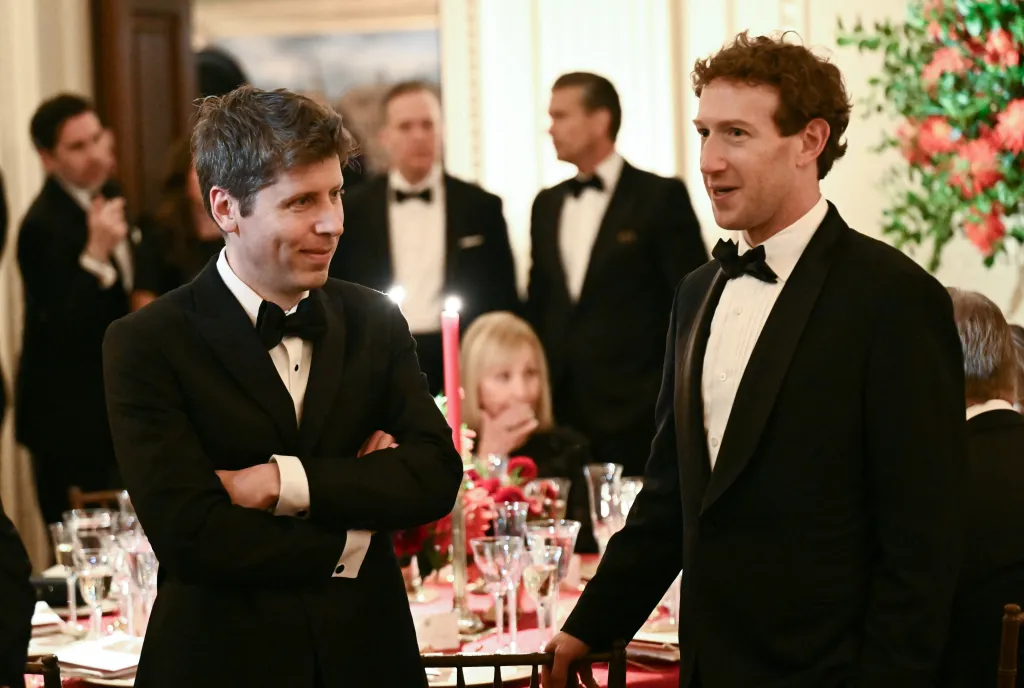
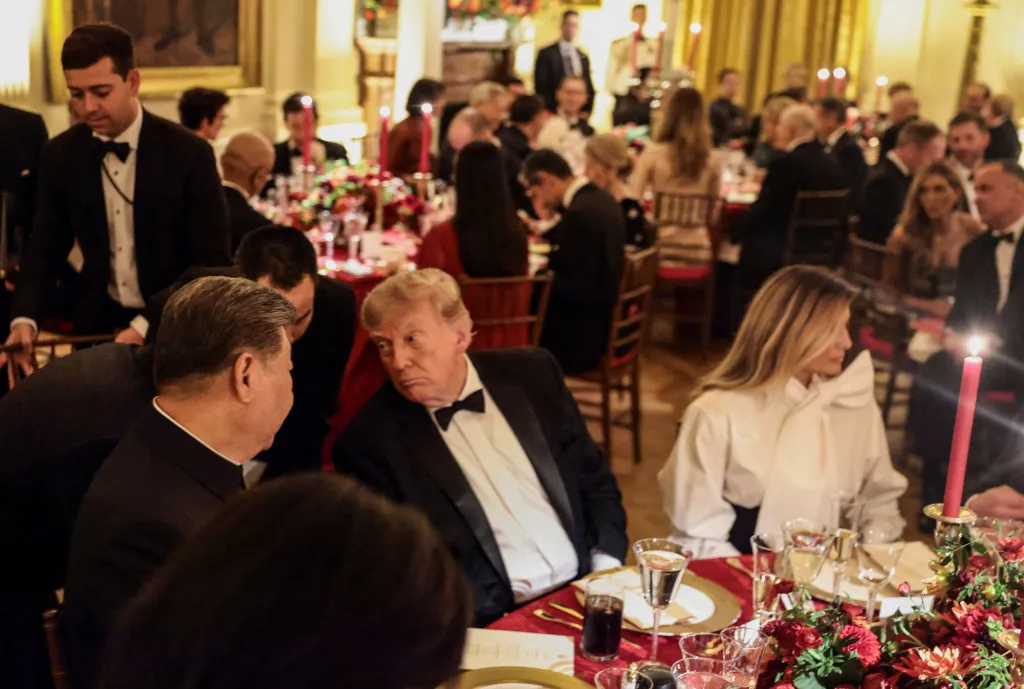
The president hosted Xi for three hours at the White House before breaking ahead of the state dinner, a glittering affair expected to draw a who's who of American tech royalty: Elon Musk, Jensen Huang, Sundar Pichai, Jeff Bezos, Sam Altman, Michael Dell and Tim Cook. Goldman Sachs chief David Solomon and Microsoft CEO Satya Nadella were also spotted making their way into the mansion.
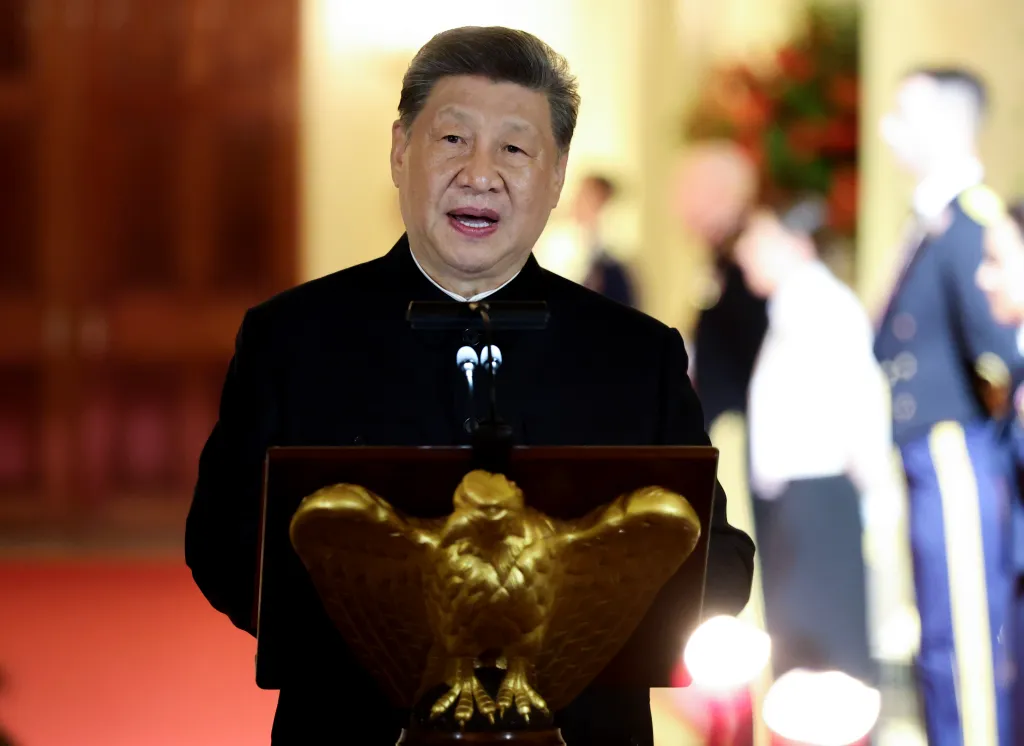
The dinner was slated to begin around 8:10 p.m., after Mr. Trump and Xi delivered remarks in the East Room.
A tarmac greeting not seen since 1962
In a rare gesture Wednesday night, the president and first lady met Xi and his wife on the tarmac at Joint Base Andrews — the first time a sitting president has greeted a foreign leader there since 1962, when John F. Kennedy welcomed British Prime Minister Harold Macmillan.
The tarmac reception set the tone for a visit steeped in diplomatic theater, one that paired the grandeur of a state dinner with the weightier, less visible work of managing the world's most consequential bilateral relationship.
The truce behind the pomp
The visit comes a day after the two sides agreed to a trade truce, a tentative de-escalation in a relationship defined by tariffs, technology restrictions and strategic rivalry. For Mr. Trump, the state dinner offered a stage to showcase a personal bond with Xi that he has long cultivated as proof of his dealmaking instincts. For Xi, the visit — his first to Washington in 11 years — was a chance to re-engage directly with an American president whose second term has upended assumptions about US-China relations.
Behind the chandeliers and the toasts, the substantive agenda is formidable: trade, Taiwan, fentanyl precursor chemicals, artificial intelligence, and the broader contest for technological supremacy. Whether the warmth on display at the North Portico translates into durable agreements remains the central question of a visit that has, so far, been long on ceremony and short on detail.